
Shipping Automation Software
Shipium’s shipping automation software applies your business rules to every shipment, then selects the carrier and service without manual review.

From business rules to carrier invoices, all in one platform
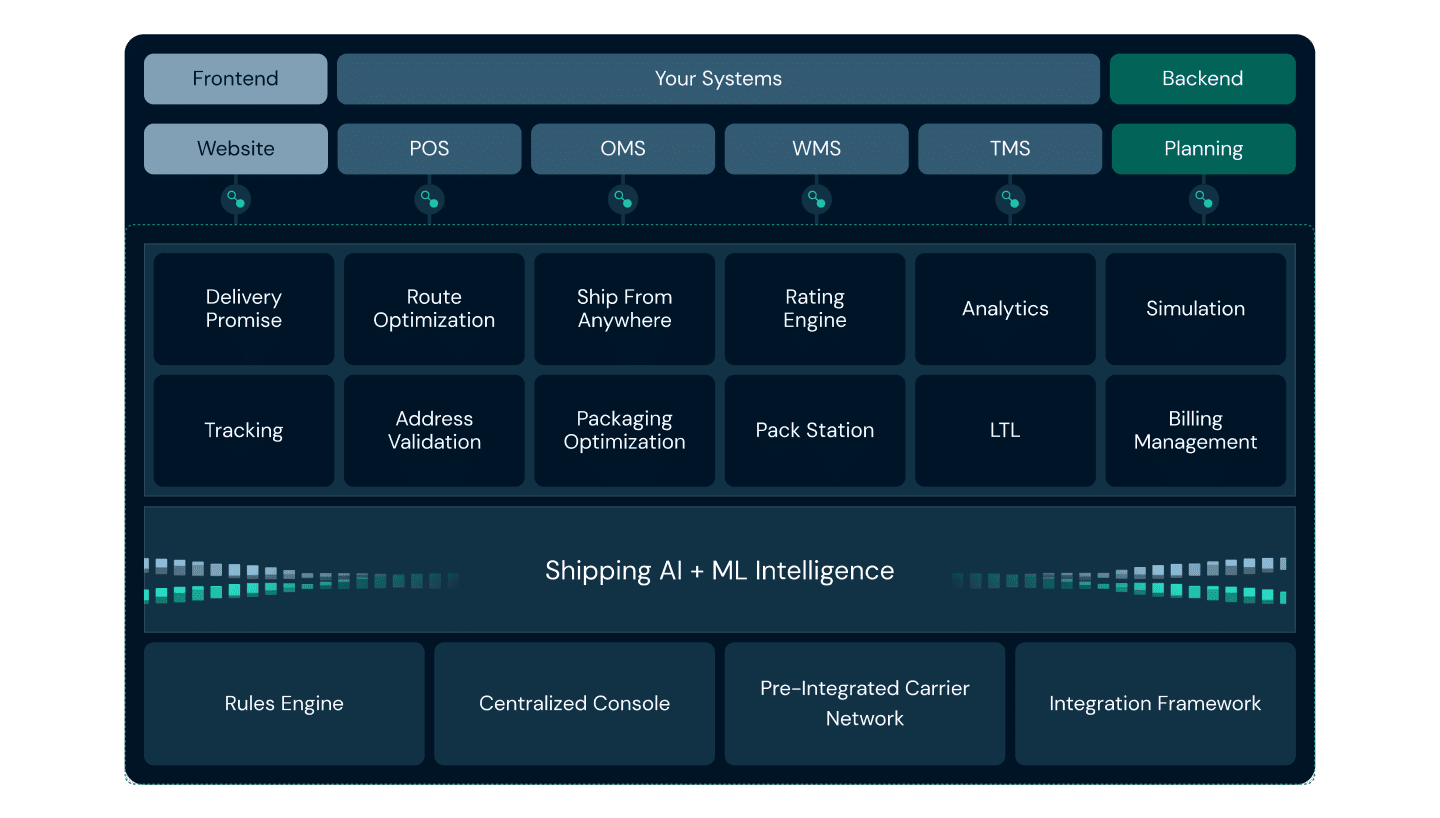
Our shipping automation technology sits between your order systems and your carriers, running every shipment through one rule engine. Your operators own the logic, and Shipium runs it without a person in the loop.
Workflow configuration
Shipium keeps your shipping logic, service levels, and carrier eligibility in one place. Rules apply network-wide or by origin, and changes take effect without a development cycle.

Carrier and service selection
For every shipment, Shipium checks carrier eligibility, shops dates and rates, then balances volume across your network. Predictive models pick the service that hits the promise at the lowest cost.

Delivery promise generation
Shipium models transit times against inventory and live network conditions, then returns an exact date for the product page and checkout. The promise and the carrier decision come from one call.

Invoice validation
Shipium ingests invoices from every carrier and checks each line against your pre-shipment data. Overcharges surface before you pay, down to the individual tracking number.

Ecommerce shipping automation trusted by enterprise retailers


One way to automate shipping across every site and system
Our shipping automation software is built for networks where order volume, carrier mix, and fulfillment sites keep changing. The rules absorb that change so your team doesn’t have to.
Reduced manual work
Shipium handles rating, carrier selection, and label creation without a person touching each order. Your team works the exceptions that need judgment instead of processing routine shipments.

Standardized execution
Shipium applies the same logic to every site, carrier, and order channel, or different logic by origin when a site needs it. Execution stops varying by who configured what.

Connected fulfillment systems
Shipium hands the same automated decision to your storefront, your warehouse, and your carrier. Nothing gets re-entered between systems, and nothing drifts out of sync as the shipment moves.
Frequently asked questions
What is shipping automation software?
Shipping automation software is a system that applies business rules and shipment data to shipping decisions that teams would otherwise make order by order. Rating, carrier selection, label creation, and tracking updates all run on predefined logic.
For enterprise operators, shipping automation earns its place once order volume, fulfillment sites, and carrier options outgrow what a team can review by hand. A platform like Shipium makes each decision once and holds it across the network.
What is ecommerce shipping automation?
Ecommerce shipping automation applies business rules to online orders, covering the estimated delivery date shown at checkout, carrier selection, label creation, and tracking updates.
The storefront is what makes ecommerce different. A shopper sees a date before the order exists, so the automation has to commit to something the network can deliver, then pick the carrier and service that hold that promise.
How does shipping automation work?
Shipping automation solutions take order data from your systems, apply your business rules, and return a shipping decision before the order reaches the warehouse floor. With Shipium, that decision runs in four steps:
- Eligibility check: Narrowing the carrier list to those that can serve the destination.
- Date shopping: Testing transit times against the promised delivery date.
- Rate shopping: Comparing fully loaded rates, surcharges included, across eligible carriers.
- Volume balancing: Spreading shipments across carriers to hold contract commitments.
The decision returns the carrier, service, delivery date, and label together. After delivery, carrier invoices get checked against the same pre-shipment data that drove them.
What shipping workflows can be automated?
Shipping teams can automate workflows such as:
- Carrier selection: Confirming eligibility and shopping rates across every carrier in your network.
- Service selection: Choosing speed against cost for each individual shipment.
- Delivery date generation: Returning an exact date for the product page and checkout.
- Label creation: Generating labels in the same call as rating and carrier selection.
- Tracking updates: Consolidating status across carriers into one feed.
- Invoice validation: Checking each carrier invoice line against pre-shipment data.
Shipium automates these shipping process workflows by applying your business rules and shipment data to every shipping decision, so speed and accuracy hold as volume grows.
How does shipping label automation help fulfillment teams?
Shipping label automation helps fulfillment teams generate labels faster and more consistently. It reduces manual work and limits process variations across nodes. With Shipium, label creation happens within the same workflow as rating, carrier selection, and shipment execution.
How does shipping intelligence improve automation?
Shipping intelligence improves automation by using performance analytics to guide better shipping decisions over time. Instead of relying solely on static rules, teams can use shipment history, network signals, delivery data, and operational trends to improve how orders move through the fulfillment process.
Shipium combines business rules with network and predictive data to help you automate decisions while continuing to optimize cost, speed, and service quality.
What systems can shipping automation technology integrate with?
Shipping automation technology can integrate with systems such as order management systems (OMS), warehouse management systems (WMS), transportation management systems (TMS), ecommerce platforms, carrier systems, BI tools, and distributed fulfillment technology.
These integrations help connect the systems that:
- Create orders: Capturing destination, contents, and the service requested.
- Manage inventory: Determining which site can ship each order.
- Coordinate fulfillment: Passing the carrier and service decision to the floor.
- Generate labels: Returning label data in the same call as the rate.
- Track delivery performance: Feeding carrier status back for analysis.
Shipium helps integrate those systems into a unified automation environment, so you can make faster shipping decisions without abandoning your existing technology.