


The best shipping software for businesses balances usability with the advanced automation needed to protect fulfillment margins. That means more than just serving as a label-generation engine. It needs to operate as an orchestration layer that controls costs and selects the optimal carrier and service level for every order.
In a crowded marketplace, this shipping software comparison breaks down the top 15 options and explains why Shipium is the best choice for those managing enterprise-scale volumes.
| Top shipping software solutions | Key features |
|---|---|
|
Shipium |
|
|
ShipStation |
|
|
ShipEngine |
|
|
Shippo |
|
|
Easyship |
|
|
AfterShip |
|
|
Proship |
|
|
Shipwell |
|
|
Enveyo |
|
|
PitneyShip |
|
|
EasyPost |
|
|
Outvio |
|
|
Pirate Ship |
|
|
ShippingEasy |
|
|
Veeqo |
|
Shipium
Shipium delivers AI-powered shipping orchestration that connects your ecommerce, OMS, WMS, and carrier network into a single decision layer. It optimizes your carrier selection and network routing in real time. As a result, you can ensure you meet every delivery promise at the lowest possible cost.
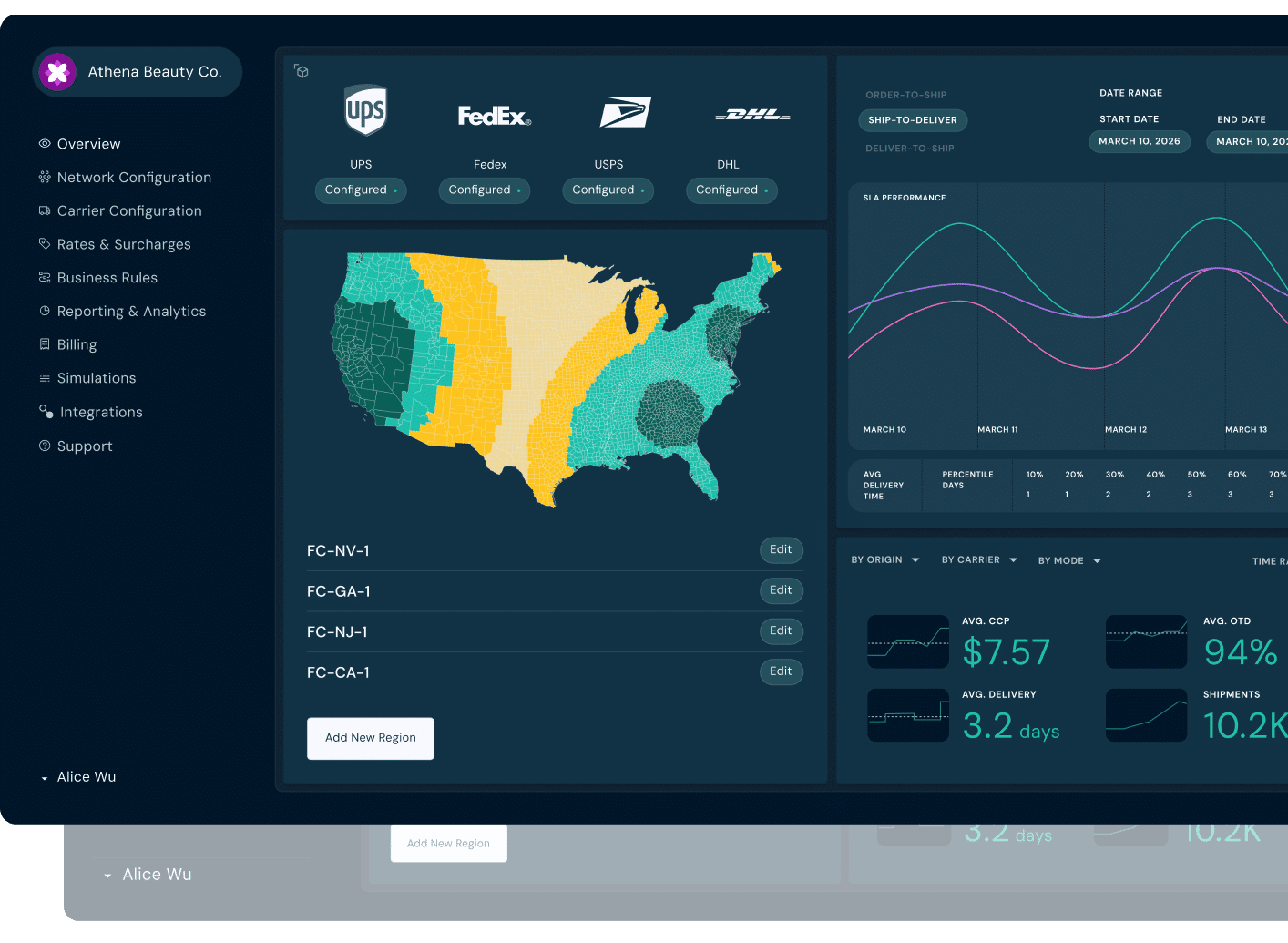
High-volume operators can standardize shipping rules within the platform, reducing manual intervention while maintaining flexibility to adjust their carrier mixes and fulfillment strategies from a centralized console that learns and adapts as your business grows. Shipium’s predictive models also extend upstream into the supply chain, helping forecast disruptions, optimize inventory placement, and simulate network scenarios before they impact delivery performance.
Shipium pros:
- Optimized carrier selection, which reduces parcel spend while ensuring each shipment meets its promised delivery date
- Multi-warehouse order routing and split shipments that improve delivery speed and balance inventory across your network
- Easy integration with existing tech stacks, so you can connect order management and carrier systems without costly custom development
ShipStation
ShipStation manages the shipping of orders from multiple sales channels, from label generation and rate comparisons to workflow automation. Operators use it to import orders, process shipments with major carriers, and integrate with ecommerce platforms to update tracking information.
ShipStation pros:
- Integration with multiple e-commerce platforms
- Built-in address validation
Cons of ShipStation:
- Occasional delays in loading screens
- Long wait times for customer support
- Multiple unresolved bugs reported by users
ShipEngine
ShipEngine is an API-driven shipping platform that lets developers add multi-carrier rate shopping, label creation, and shipment tracking to their existing applications. It provides access to multiple global carriers through a single integration, reducing the need to set up and maintain separate carrier connections and accounts.
ShipEngine pros:
- Support for 70+ carriers
- API integration for custom applications
Cons of ShipEngine:
- Developer knowledge required for setup
- Extended customer support response times
- Software experiences glitches in platform functionality
Shippo
Shippo offers an ecommerce shipping platform that lets you compare rates, buy labels, and manage orders via an API or web dashboard. It connects to your online store to automate label creation and provides shipment tracking for carriers, such as USPS, UPS, and FedEx.
Shippo pros:
- Label printing for multiple carriers
- Multichannel order management capability
Cons of Shippo:
- Rudimentary support for automation rules
- Per-label surcharge applied to costs
- Limited customization for packaging presets
Easyship
Easyship is a shipping platform designed to manage international logistics. It automates your label generation, compares cross-border rates, and calculates duties and taxes. It also produces the required customs documentation for global fulfillment.
Easyship pros:
- Integrated customer service
- Tracking visibility
Cons of Easyship:
- Software lags during high usage
- Functionality requires multiple rules
- Inconsistent data accuracy
AfterShip
AfterShip is a shipment platform that centralizes your carrier tracking data and sends delivery updates to your customers by email or SMS. It connects to your online store, supports branded tracking pages, and includes tools to manage returns and post-purchase communication.
AfterShip pros:
- Self-serve shipment visibility for customers
- Broad global carrier coverage
Cons of AfterShip:
- No real-time delivery confirmation
- International shipping update delays
- Limited support for smaller or niche carriers
ProShip
ProShip is a high-volume shipping platform that automates rate shopping and label generation using customizable business rules. It supports on-premises deployment and provides detailed reporting to monitor your parcel accuracy, performance, and workflows.
ProShip pros:
- Support for packaging logic
- Real-time shipment analytics
Cons of ProShip:
- Lengthy development setup
- Inconsistent product and carrier support
- Advanced technical knowledge needed
Shipwell
Shipwell is a transportation management system that handles load tendering and carrier rate sourcing across your parcel and LTL networks. It connects your ecommerce platform and ERP systems to manage order flows and coordinate shipping operations.
Shipwell pros:
- Support for multi-modal rate comparisons
- Tender decision automation across networks
Cons of Shipwell:
- Extensive onboarding configuration
- Limited parcel-specific reporting tools
- No advanced out-of-the-box analytics features
Enveyo
Enveyo provides a platform for shipping data analysis, carrier contract modeling, and parcel spend optimization. It relies on historical shipment data to test the impact of rate changes and to generate logistics forecasting reports.
Enveyo pros:
- Support for detailed performance insights
- Future shipping scenario functionality
Cons of Enveyo:
- No real-time last-mile visibility
- Need for complex data integration setup
- Limited delivery status updates
PitneyShip
PitneyShip is a web-based platform for managing your postage metering, label creation, and multi-carrier shipping flows. It supports both USPS and UPS for domestic parcels and includes rule-based settings for standardized shipments and packaging.
PitneyShip pros:
- Presets for frequent items
- Real-time tracking visibility
Cons of PitneyShip:
- Failures reported after software upgrades
- Slow customer support access
- Workarounds required for frequent errors
EasyPost
EasyPost is a shipping API that enables carrier rate comparison, label generation, and tracking across a network of more than 100 carriers. It also includes address verification and shipping insurance tools that you can embed directly into custom fulfillment and logistics applications.
EasyPost pros:
- Address verification
- Shipment tracking
Cons of EasyPost:
- API expertise required for integration
- Software charges per-label fees
- Limited usability for non-developers
Outvio
Outvio is a platform for order fulfillment automation, label generation, and customer notification workflows. It integrates with your ecommerce platform, applies carrier selection rules, and manages tracking updates. The system includes a dashboard for printing labels and processing customer returns.
Outvio pros:
- Support for ecommerce order management
- Responsive customer support
Cons of Outvio:
- Excessive notifications
- Additional charges for additional warehouses
- Strict return limits
Pirate Ship
Pirate Ship is a shipping platform that offers discounted rates for USPS and UPS labels without a monthly subscription. You can import orders from your ecommerce platform, print labels in batches, and access tracking and insurance options to manage shipments.
Pirate Ship pros:
- Label printing included in fees
- User-friendly interface
Cons of Pirate Ship:
- Challenging insurance claim process
- Frequent website bugs and rejections
- Limited enterprise-level ERP/WMS integrations
ShippingEasy
ShippingEasy is a platform for managing order imports, discounted USPS and UPS labels, and batch label printing. It syncs tracking back to connected storefronts and supports automation rules for carrier selection, packaging, and fulfillment.
ShippingEasy pros:
- Multi-channel order imports
- Batch label management
Cons of ShippingEasy:
- Limited international carrier options
- Occasional data sync errors
- Fluctuating volume-based pricing
Veeqo
Veeqo manages your inventory across warehouses, processes orders, and generates shipping labels with carrier optimization. It integrates with marketplaces like Amazon and eBay for fulfillment, and includes reporting tools to track stock and shipments.
Veeqo pros:
- Multi-location inventory tracking
- Connect to major online marketplaces
Cons of Veeqo:
- Steep setup learning curve
- Dependent on reliable internet connectivity
- No advanced custom reporting options
Get the best shipping platform for enterprise users: Shipium
For enterprises managing increasingly complex fulfillment operations, Shipium offers an AI shipping orchestration solution that lets you manage the entire workflow, from “buy now” to “delivered,” in one robust platform. With seamless API integrations and a built-in carrier network, our platform improves your delivery accuracy and reduces shipping costs, driving higher customer satisfaction and operational efficiency.
By leveraging Shipium to manage the planning and execution of your shipments, you can:
- Rely on intelligent, automated carrier selection and routing decisions that reduce your average parcel spend by up to 12%
- Create fast, reliable delivery promises before checkout, increasing average checkout conversion by 4%-6%
- Reduce the average delivery time by 1.7 days, enhancing customer experience
Book a demo today and see why Shipium is the best shipping software for managing your high-volume fulfillment operations.
Frequently asked questions
What is shipping software?
Shipping software is a digital logistics platform that centralizes and automates the movement of goods from the point of origin to the final destination. By integrating with your ecommerce storefronts and carrier networks, these solutions manage the full fulfillment lifecycle, including rate shopping, label generation, and real-time tracking, within a single interface.
For high-volume operators, this shipping technology is essential for scaling operations as it replaces manual data entry with automated workflows that:
- Eliminate human error
- Reduce transit costs
- Ensure you meet delivery promises
Implementing the configurable business rules engine in the Shipium platform, shippers can automate complex shipping decisions across carriers, regions, and service levels without manual intervention.
What are the common features of shipping automation software?
Shipping automation software functions as a central command center that replaces manual logistics tasks with programmable logic, connecting your sales channels and carrier network.
Common features of the best parcel shipping software include:
- Customized rule logic: Assign carriers, service levels, and packaging types automatically based on weight, value, or destination.
- Batch processing: Generate hundreds of shipping labels, packing slips, and customs forms with a single click.
- Real-time rate shopping: Compare live shipping quotes instantly across multiple carriers to ensure the most cost-effective service is always selected.
- Auto-address validation: Scan and correct customer addresses before printing, eliminating delivery failures and “return to sender” surcharges.
Leveraging the top features of automation solutions can improve your overall shipping operations. For example, with Shipium, Grove Collaborative eliminated 15% of its common shipping errors through real-time rate card validation, boosting throughput by 75%.
How do I choose the best shipping software for my needs?
Here’s how to choose the best shipping software for your business:
- Map out your actual shipping DNA: It’s important to understand your needs for fulfillment operations. Analyze where you’re shipping, which carriers you’re relying on, and how high your peak-season ceiling actually is.
- Test the hands-off factor: A shipping platform is only as good as its automation. See if it can handle rate shopping and carrier selection on its own, or if your team will be stuck clicking through manual prompts for every other order.
- Verify the plug-and-play claims: Avoid the trap of custom integration costs. Your shipping software should talk to your current ERP, WMS, and store out of the box. If the API looks like a project that will take six months, walk away.
- Do the math on the hidden costs: It’s easy to focus on the monthly subscription, but the real money is in the label fees and carrier discounts. Compare the total landed cost, not just the price of the software.
When evaluating the best shipping software, it’s critical to ensure the solution you select scales with your business. Shipium, for example, future-proofs shipping operations with self-improving predictive models that deliver over 90% transit accuracy, plus analytics for proactive carrier optimization and network simulations.
What is the best shipping software for ecommerce? Explore our buyer’s guide.
Can Shipium’s shipping software solutions integrate easily with my current tech stack?
Yes. Shipping software solutions from Shipium integrate with your existing tech stack, using a flexible API-first microservices architecture that connects directly to your OMS, WMS, TMS, or ERP systems. It offers certified compatibility with enterprise platforms, including Manhattan, Blue Yonder, and Körber, allowing you to build connections yourself, use pre-built connectors, or rely on our dedicated implementation team and partners for custom setups.
See how Shipium integrates into your ecosystem.
What shipping carriers does Shipium support?
Shipping solutions from Shipium support an extensive pre-integrated network that covers 99.6% of domestic U.S. parcel shipments. If your carrier isn’t currently supported, our team can add it, typically within 8 weeks, at no cost.
Explore our pre-integrated carrier partner network.
-
 Read more
Everything You Need to Know About Third Party Logistics Companies
Whether you’re a high-volume shipper looking to better manage fulfillment in specific geographic locations…
-
 Read more
How Last Mile Delivery Impacts Your Shipping Cost
When studying ecommerce leaders like Amazon, it becomes clear that focusing on the customer…
-
Read more
How to Future-Proof Your 3PL Ecommerce Fulfillment Strategy
The role of third-party logistics (3PL) ecommerce fulfillment has changed. What was once a…