
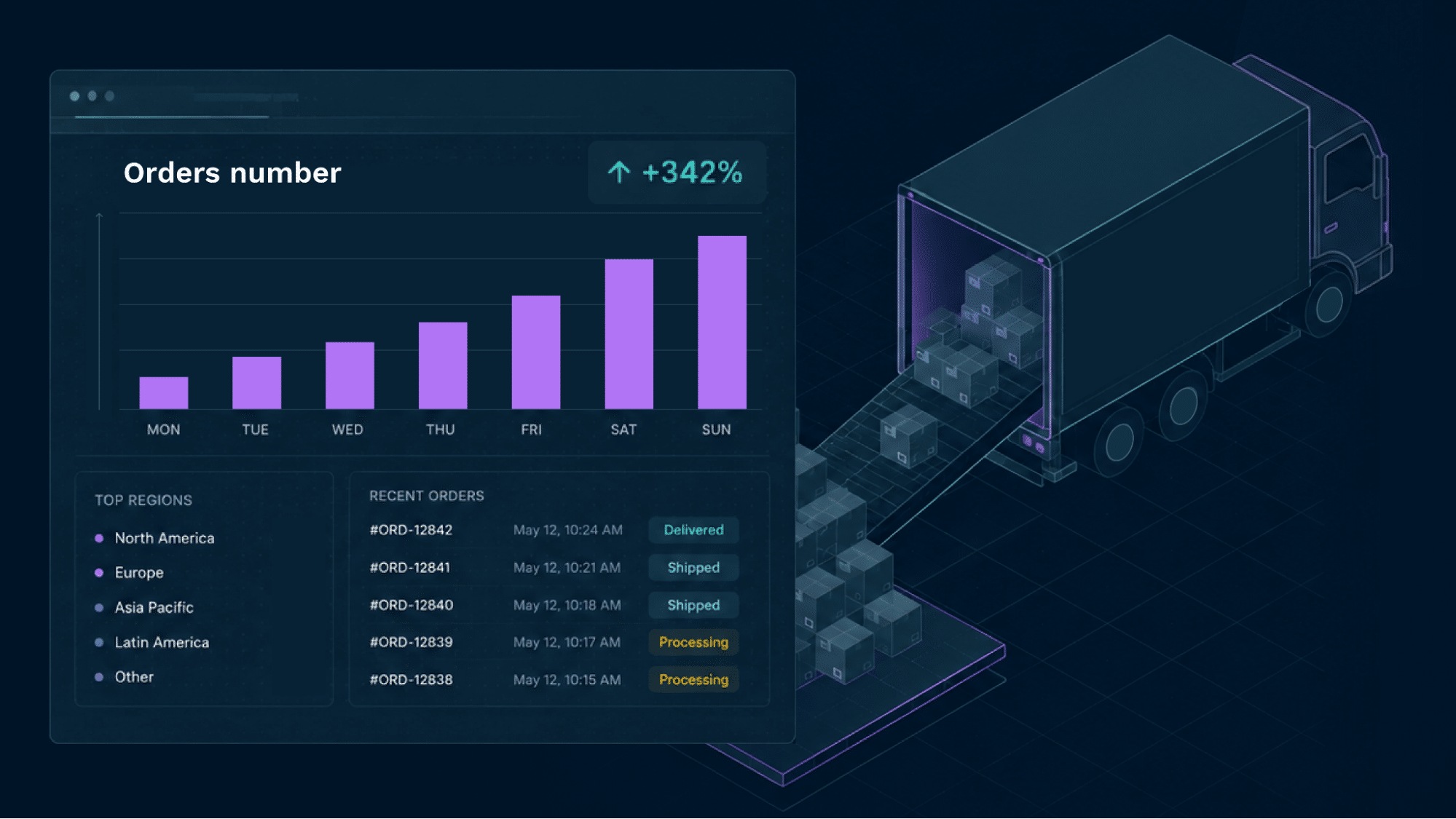

To manage peak-season shipping demand, you have to absorb pressure across fulfillment, carrier networks, and customer service simultaneously. As order volumes surge, you have to balance customer expectations with operational constraints like limited carrier capacity and rising transportation costs.
By preparing early, you are better positioned to maintain service levels and deliver a consistent customer experience throughout your busiest months.
Key highlights:
- Peak shipping season is the high consumer demand period when order volumes place additional pressure on fulfillment and carrier networks.
- Early planning lets you secure carrier capacity, position inventory strategically, and reduce operational disruptions.
- The most effective peak-season shipping strategies combine forecasting, automation, inventory optimization, and proactive customer communication.
- Shipium helps manage peak season shipping through routing optimization, delivery promise accuracy, packaging optimization, and real-time shipping analytics.
Let’s explore nine peak season shipping tips to strengthen fulfillment operations and improve performance.
1. Analyze past performance data
Preparing for peak season shipping starts with understanding what happened during previous periods of increased demand, such as the last holiday season. Historical shipping analytics reveal recurring bottlenecks and operational inefficiencies that may resurface if left unaddressed.
Key areas to analyze include:
- Order volume trends and demand patterns
- Delivery performance by carrier and service level
- Carrier utilization and capacity constraints
- Fulfillment center throughput
- Customer service inquiries related to shipping
Use these findings to identify which carriers, fulfillment centers, service levels, or workflows underperformed. You can then create an action plan, assigning specific corrective actions, owners, and deadlines before peak-season volumes begin to rise.
Understand why you should leverage predictive analytics for supply chain decision-making.
2. Secure carrier capacity early
Carrier capacity becomes constrained as peak season approaches. Case in point: in 2025, shippers delivered about 2.3 billion parcels during the peak for a 5% year-over-year increase from 2024, according to ShipMatrix. By engaging carriers early, you’re in a stronger position to secure capacity and negotiate rates, ultimately helping reduce the risk of supply chain disruptions when volumes surge.
Secure carrier capacity earlier by:
- Forecasting expected shipping volumes
- Identifying lane and service-level agreement (SLA) requirements
- Securing carrier commitments in advance
- Negotiating carrier rates before peak surcharges take effect
- Establishing relationships with backup carriers
Advanced planning gives carriers greater visibility into your anticipated demand, making it easier to align capacity with your operational needs. If you wait until peak season is underway, you’ll often face higher costs and limited availability.
3. Diversify your shipping routes and carriers
Relying too heavily on a single carrier creates risk during peak periods. Capacity restrictions, weather disruptions, labor issues, and network congestion all impact delivery performance when demand is highest. Diversifying carriers and shipping routes keeps options open when conditions change during periods of elevated demand.
Consider these strategies:
- Expand your carrier partner network to reduce dependence on a single provider
- Use regional carriers where they fit the lane
- Create contingency routing plans before disruptions occur
- Support multiple shipping service levels
- Balance shipment volume across providers
An end-to-end shipping platform can simplify the process of diversifying and managing an extended carrier network. With a solution like Shipium, you get shipping AI that combines inventory positions with transit predictions to help you make routing decisions that reduce time in transit and shipping costs.

4. Automate order and inventory workflows
Manual processes that work during normal periods become bottlenecks when order volumes surge. Eliminating your manual fulfillment and inventory workflows drives efficiency and improves visibility throughout peak season shipping.
Here are the key processes to automate:
Inventory synchronization
Accurate inventory visibility is essential when stock is moving rapidly across fulfillment centers and ecommerce channels. Automated inventory synchronization ensures orders are routed against current inventory levels, reducing the risk of overselling and stockouts.
Order routing
Smart order routing uses real-time data to determine the best fulfillment location for each order based on inventory availability, shipping costs, and delivery requirements. This approach enables you to improve delivery performance while controlling fulfillment costs.
Repetitive fulfillment tasks
Automatic workflows eliminate repetitive processes that slow operations during peak periods. Common examples include:
- Label generation
- Order processing
- Inventory updates
- Delivery exception management
Reducing manual touchpoints allows fulfillment teams to focus on higher-value activities while maintaining throughput during periods of elevated demand.
5. Pre-stock high-demand products near customers
Inventory placement affects both shipping costs and delivery speed. Positioning high-demand products closer to customers reduces transit distances, relieving the pressure on carrier networks.
When deciding what inventory to pre-stock and where to position it, consider:
- Best-selling products
- Regional demand patterns
- Store fulfillment locations
- Third-party logistics (3PL) facilities
- Safety stock allocation
A well-planned inventory strategy as part of your larger order management process lets you shorten lead times, reduce transportation costs, and improve the customer experience during peak order volumes.
6. Build buffer time into delivery promises
Peak season introduces greater variability into shipping operations. Carrier congestion and fulfillment delays impact transit times during periods of high demand. Building reasonable buffer time into delivery promises can:
- Reduce missed expectations
- Lower customer complaint volume
- Minimize refund requests
- Protect customer satisfaction
The most effective approach for maintaining accurate delivery estimates is to use carrier performance data, lane-level transit times, and fulfillment capacity to create delivery estimates that reflect real operating conditions.
With a solution like Shipium in place, you can offer your customers accurate delivery promises that dynamically adjust to your network’s capacity, allowing you to maintain a great customer experience by setting expectations during especially busy periods. High-volume operators using our delivery estimates see an average 4% conversion increase.

7. Strengthen customer communication channels
Even well-prepared shipping operations experience delays during high-volume periods. When disruptions occur, proactive communication reduces support volume and, more importantly, maintains customer trust. According to the Zendesk Benchmark, 50% of customers will switch to a competitor after one bad experience, making it critical to manage their expectations effectively.
Start by focusing on:
- Automated shipment notifications
- Delay communications
- Self-service tracking tools
- Peak-season expectation setting
As peak-season volumes rise, shipping-related inquiries can overwhelm customer service teams and divert resources from more complex issues. Providing timely updates throughout the delivery journey reduces uncertainty, lowers ticket volume, and allows support teams to focus on higher-priority customer needs.
8. Improve cartonization and packaging strategies
Packaging decisions affect shipping costs and overall customer satisfaction. Optimizing cartonization lowers transportation expenses while improving fulfillment performance. Focus on these areas to strengthen your strategy during peak season:
Select the right packaging
Selecting the right packaging for each shipment minimizes wasted space, improves trailer utilization, and enhances overall parcel spend. Best practices include:
- Matching packaging to product dimensions
- Minimizing unused space within shipments
- Standardizing packaging options where possible
- Reviewing packaging performance regularly
With Shipium’s packaging optimization technology, you automate cartonization decisions, improve packaging efficiency, and reduce dimensional weight charges, which erode margins.
Reduce dimensional weight charges
Dimensional weight pricing increases shipping costs when you pack products in oversized boxes. To reduce DIM-related costs:
- Right-size packaging whenever possible
- Review packaging assortments regularly
- Match packaging dimensions to product profiles
- Eliminate unnecessary void space
Evaluate packaging performance over time
Treat packaging optimization as an ongoing process rather than a one-time initiative. Key metrics to track include:
- Dimensional weight charges
- Packaging costs
- Damage rates
- Packaging utilization trends
Regular analysis uncovers opportunities to reduce costs and support continuous operational improvement.
9. Monitor real-time shipping metrics daily
Conditions can change quickly during peak season. Monitoring shipping performance daily allows teams to identify issues early and make adjustments before they impact customers.
Your team should be tracking:
- On-time delivery rate
- Outbound shipping costs
- Carrier performance
- Delivery exception rates
- Order backlog volume
Regular visibility into these shipping metrics helps you respond faster to disruptions and optimize carrier performance.
Tools like Shipium Orca Analytics allow you to move beyond static reports to gain real-time visibility into your shipment costs, delivery performance, and carrier operations, so you can spot and resolve issues before your customers notice.

Manage peak season logistics with Shipium
Peak shipping season places pressure on every part of the fulfillment process, from inventory placement and routing decisions to delivery promises and carrier performance. Shipium manages these challenges through advanced fulfillment optimization, dynamic delivery promise technology, packaging optimization, and real-time shipping analytics.
Consolidating shipping capabilities on one platform protects margin and keeps the customer delivery experience consistent, even at high volumes. In fact, during the 2024 peak season, our on-time delivery (OTD) is over 95% across all customers.
Book a demo today and learn how Shipium helps manage peak season shipping, improving performance during your busiest time of year.
Frequently asked questions
When is peak shipping season?
Peak shipping season typically runs from October through January, driven by major shopping events such as Black Friday, Cyber Monday, and Christmas. The exact timing varies by industry, but most retailers experience higher shipping volumes throughout this period.
How early should you start planning for peak season shipping?
Most businesses should begin peak-season planning several months in advance. Early preparation allows you to secure carrier capacity, position inventory strategically, optimize fulfillment operations, and test systems before shipping volumes begin to increase.
A solution like Shipium can support that preparation by helping you model and simulate shipping scenarios, letting you evaluate routing options, refine promises, and identify operational risks before peak demand arrives.
What are the biggest challenges in managing peak season logistics?
Common peak-season logistics challenges include:
- Carrier capacity constraints
- Fulfillment bottlenecks
- Inventory shortages
- Delivery delays
- Rising transportation costs
Without proper planning, these issues can negatively affect both customer satisfaction and operational efficiency. A platform like Shipium gives you the visibility and flexibility needed to manage peak-season complexity more effectively by turning real-time shipping data into faster, more informed decisions.
How does technology help manage shipping during peak season?
Shipping technology helps you improve visibility, automate workflows, optimize routing decisions, and provide more accurate delivery promises. These capabilities enable you to respond more effectively to changing conditions while maintaining service levels during periods of elevated demand.
Shipium brings these capabilities together in a single end-to-end platform, giving you the visibility and AI-driven shipping intelligence you need to adapt as peak-season conditions change.
-
 Read more
Everything You Need to Know About Third Party Logistics Companies
Whether you’re a high-volume shipper looking to better manage fulfillment in specific geographic locations…
-
 Read more
How Last Mile Delivery Impacts Your Shipping Cost
When studying ecommerce leaders like Amazon, it becomes clear that focusing on the customer…
-
Read more
How to Future-Proof Your 3PL Ecommerce Fulfillment Strategy
The role of third-party logistics (3PL) ecommerce fulfillment has changed. What was once a…