
You are paying Zone 7 rates on orders that could ship from Zone 2. The inventory is sitting in a store or regional node near the customer, but the order still routes to a distant distribution center because your channel-specific fulfillment rules direct it there.
Omnichannel distribution closes the gap between where inventory sits and where orders actually ship from. This guide covers how it works, how it differs from a multichannel setup, and seven strategies that enterprise shippers use in 2026.
Key highlights:
- Omnichannel distribution is the practice of pooling inventory across every channel and location, then routing each order to the origin that balances cost, speed, and the delivery promise.
- Siloed systems, stale inventory counts, split shipments, and hidden accessorials are what keep most networks from routing orders to the node that would protect margin.
- Shipium provides an enterprise shipping platform that unifies routing across every node, holds carrier selection to the delivery promise, and cuts parcel spend for leading enterprises.
What is omnichannel distribution?
Omnichannel distribution is a fulfillment model that pools inventory across every location and channel, then routes each order to the origin that best balances cost, speed, and the delivery promise. A legacy setup assigns a warehouse to a website and a separate stockroom to a store; an omnichannel network treats all available inventory as one shared pool that any channel can draw from.
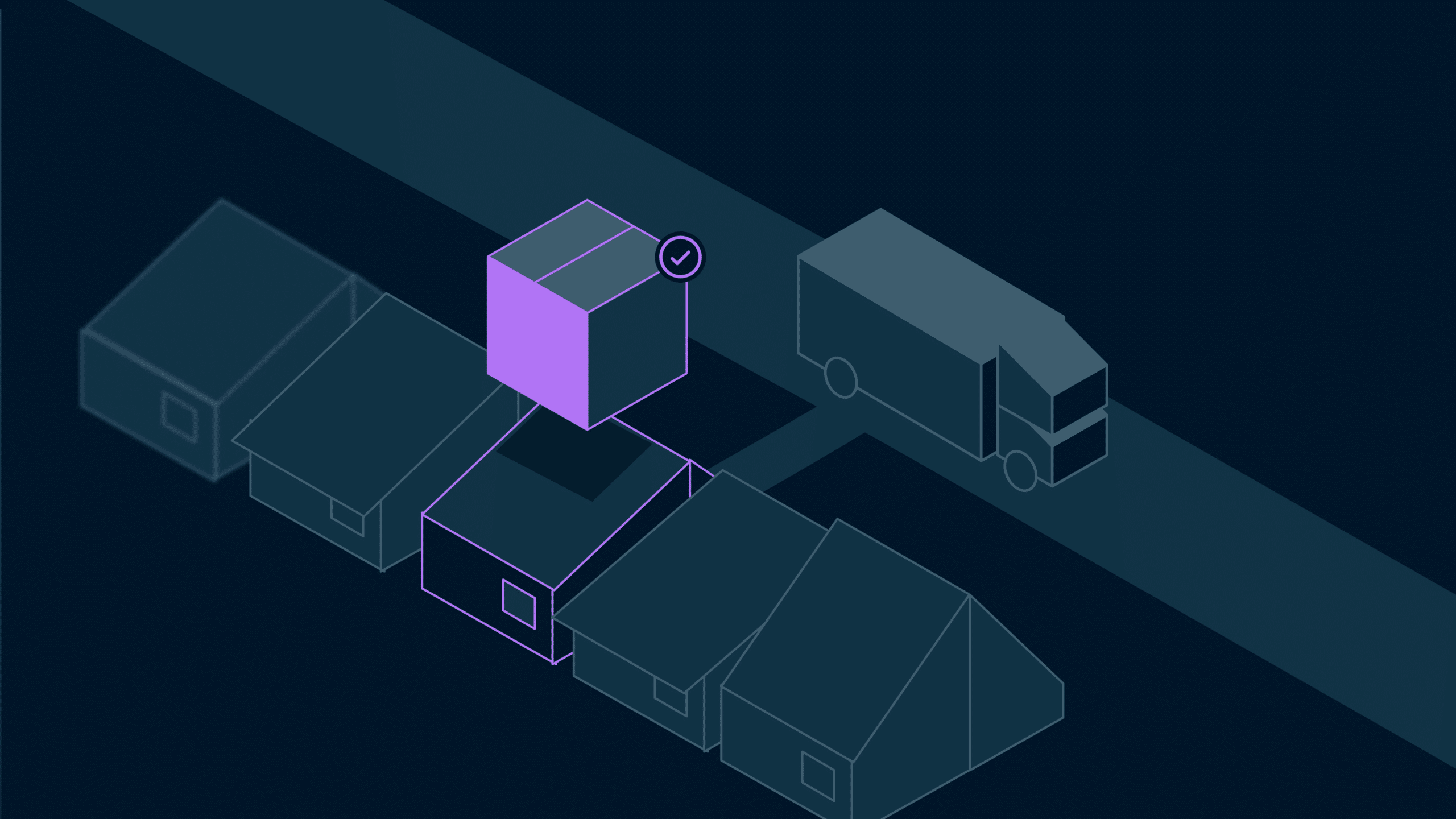
A single order-routing engine reads real-time inventory positions, carrier rates, and promised delivery dates, then picks the node that satisfies all three at the lowest fully loaded cost. That logic replaces the static rules and manual overrides ops teams often rely on with legacy shipping tools, and a modern AI shipping platform like Shipium makes those decisions in under a second across the entire network.
7 data-driven omnichannel distribution strategies for 2026
Omnichannel distribution strategies earn their return on investment when your network can act on live data that static assignments cannot. These seven strategies move from where inventory sits to how you measure each node’s cost.

1. Forward-deploy distributed inventory toward demand
Placing inventory closer to areas of concentrated demand cuts zones traveled and shortens promised delivery dates before a single carrier rate enters the math. Forward deployment positions stock in regional nodes based on demand forecasts, so the average order ships from an origin one or two zones away, not across the country.
That strategy depends on accurate, timely data about inventory levels, order history and regional demand. According to Impinj, 85% of retail supply chain leaders believe they have the right tools for visibility, yet only 36% consistently achieve accurate results.
Inaccurate data can put inventory in the wrong places, creating stockouts in high-demand regions and excess stock elsewhere. An effective omnichannel fulfillment strategy combines demand forecasting, strategic inventory placement, and order routing so that each order ships from the best available node. Shipium integrates with your OMS and treats inventory position as a routing input, so the units you placed close to demand are the units that ship.
2. Orchestrate every order through distributed order management
Routing every order through one orchestration engine turns scattered fulfillment decisions into a single, optimized choice per shipment. Omnichannel order fulfillment breaks down when each channel routes on its own logic, because the network never sees the full set of origin options for a given order.
Carrier and node choice are linked decisions, and speed drives both. An OnTrac survey found that 60% of retailers chose alternative carriers due to faster delivery, but a new carrier bolted onto a badly chosen origin still loses to a closer node on standard service. A distributed order management layer puts that speed logic to work automatically.
Shipium sits downstream of your OMS as the execution layer across any node, any carrier, and any system, weighing origin and carrier together on every order so the fastest viable combination wins by default, not as a delivery exception someone catches later.
3. Turn retail locations into omnichannel ship-from-store nodes
Activating stores as fulfillment nodes adds hundreds of forward-positioned origins to the network without building a single new warehouse. Store fulfillment lets you ship an online order from the location closest to the customer, which shortens the last mile and moves store inventory that would otherwise sit until markdown.
Ship-from-store has crossed from pilot to standard practice among enterprise retailers. A Shipium analysis of 28 retail customers found that 59% of retailers are shipping from stores or have finalized deployment plans to go live this year. That means a network still routing everything through distribution centers now competes against ones carrying hundreds more origins.
Scaling your operations requires associate-ready tooling, and Shipium’s ship-from-store fulfillment gives your staff a guided flow for picking, packing, and rating right at the counter.
4. Cut parcel distance with zone skipping and carrier injection
Zone skipping and carrier injection move parcels most of the way to their destination in bulk before handing them to a final-mile carrier, which strips the priciest zones out of the rate. You consolidate parcels bound for a common region into a single linehaul, then tender them deep into a carrier’s network close to the delivery address.
The savings from zone skipping come from paying long-haul rates on a palletized move instead of parcel rates on every box. For example, FedEx’s published Ground rates show the size of the gap: a 3 lb parcel costs $13.30 to Zone 2 versus $18.21 to Zone 7, so every zone you strip out of the move comes off the rate.
At your parcel delivery volume, the gap between palletized linehaul and parcel rates compounds across millions of shipments, and supply chain solutions that model injection points and consolidation lanes tell you which lanes carry enough volume to justify the move.
5. Diversify carriers and rate shop every shipment
Running a diversified carrier mix and rate shopping each shipment gives the network options to route around surcharges, capacity limits, and slow lanes. A single-carrier dependency leaves you exposed to that carrier’s rate increases and peak constraints, with no fallback when a lane degrades.
Carrier diversification is becoming the operating default. According to AlixPartners, 55% of retailers say they now use carriers outside of UPS, FedEx, and USPS, which makes the single-carrier shipper the outlier absorbing every general rate increase without leverage or an alternative when capacity tightens.
Here’s how to manage carrier selection across multiple warehouses:
- Take an eligibility-first approach: Screen which carriers and services can serve that origin, destination, and package profile before comparing price.
- Rate shop on landed cost: Compare the fully loaded cost for every eligible carrier, not the base rate on the contract.
- Shop the delivery date alongside the rate: Cheap carriers that miss promises are not the cheapest options.
- Balance volume against commitments: Steer shipments across carriers to hit minimum volume commitments without overexposing a single lane.
- Validate the address before rating: Corrected addresses prevent the residential and correction surcharges that arrive weeks later.
Shipium runs a comparison on every shipment, and our last-mile carrier network of regional and national options gives the rating engine enough choices to route around any single point of failure.
6. Promise delivery dates the network can actually hit
A sound omnichannel delivery strategy shows accurate shipping timelines at checkout rather than best-case-scenario guesses. Calculate the promised date against live inventory, node capacity, and carrier transit times, and the date you publish is one the network has already confirmed it can hit.
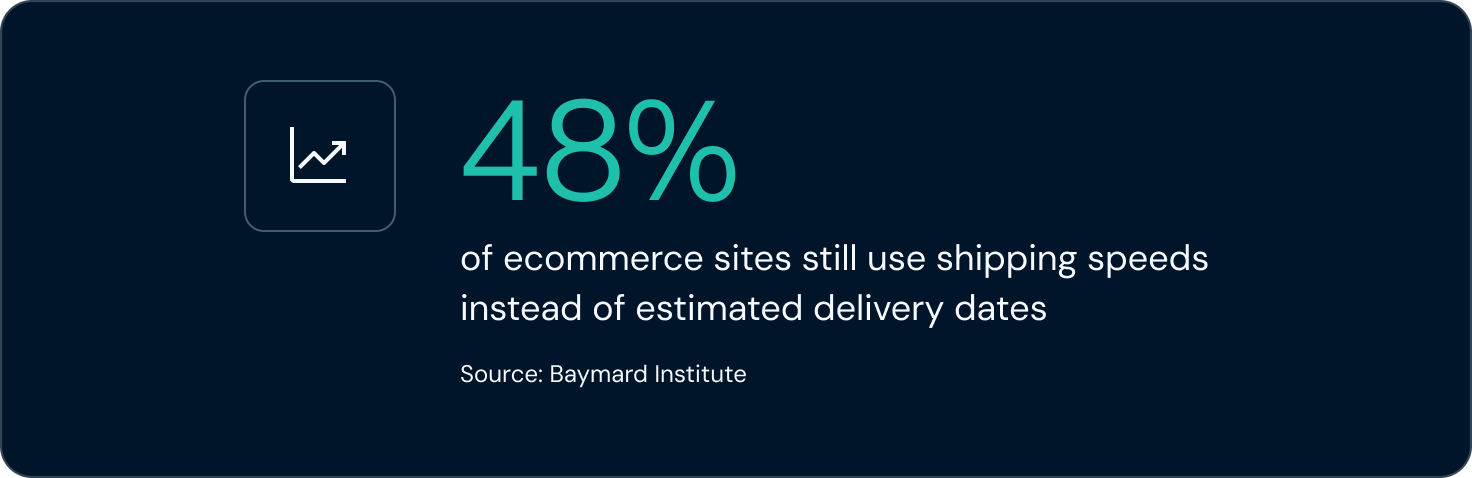
According to a Baymard Institute benchmark, 48% of ecommerce sites still use shipping speeds instead of estimated delivery dates. That leaves customers with a range to interpret, which can push them to click buy now or shop elsewhere.
7. Measure cost-to-serve by node
Tracking fully loaded cost-to-serve at the node level shows which origins quietly drain margin. Fully loaded cost captures labor, packaging, transportation, surcharges, and accessorials for each fulfillment location — not just the base carrier rate — giving your ops team a per-node profit view.
When a store node’s cost-to-serve runs higher than a nearby warehouse for the same lane, the routing engine can weight against it until the economics change. That per-node view is what turns omnichannel retail distribution from a guessing game into a design decision, and retail shipping software that reports cost-to-serve by node lets you prune, reweight, and expand origins based on what each one costs to run.
Why omnichannel logistics matters for enterprise shippers
Working with an omnichannel logistics provider helps shippers convert fragmented fulfillment into measurable financial outcomes across cost, revenue, and working capital. For enterprise operations, the payoff shows up on the invoice, at checkout, and on the balance sheet.
- Margin protected on every order: Routing to the lowest fully loaded origin trims parcel spend without pushing the delivery date out.
- Revenue recovered at checkout: Delivering an accurate, node-aware promise cuts the cart abandonment vague estimates cause, which makes omnichannel delivery a revenue lever and not only a cost one.
- Working capital freed from safety stock: Pooling inventory across every node covers demand from anywhere, so your planners hold less buffer in each location.
- Leverage at carrier renewal: Diversifying your carrier mix and rate shopping every shipment mean no single carrier holds your whole book.
- Peak absorbed without new capacity: Distributing volume across the nodes and stores you already run absorbs seasonal spikes without standing up new warehouses.
What are the main challenges of omnichannel shipping?
Omnichannel shipping introduces coordination problems that a single-channel operation never faces, and each issue carries a direct cost. These are four challenges enterprise shippers often face as they scale a distributed network:
- Split shipments multiply parcel spend: When no single node can fill a multi-item order whole, it fragments into separate parcels from separate origins, and each split adds a shipment cost.
- Store selling and store fulfillment compete for the same labor: A busy sales floor starves fulfillment of hands, so store nodes miss pick deadlines unless routing respects each store’s real-time labor capacity.
- Inventory counts go stale between syncs: A store sells the last unit on the floor while the site still shows it available, and the order placed against that count becomes an oversell you cannot honor.
- Surcharges and accessorials hide landed cost until the invoice arrives: The origin that looked cheapest at order time costs more once dimensional weight and accessorials land, so rating logic without the full schedule optimizes against made-up numbers.
Top features of enterprise shipping technology for omnichannel retailers
Enterprise shipping technology for omnichannel retailers needs to turn your distributed complexity into automated, cost-aware decisions on every order. The capabilities that matter most share one trait: they operate on live data across the entire network.
| Omnichannel distribution feature | What it does | Why it matters for enterprise shippers |
|---|---|---|
| Distributed order routing engine | Real-time selection of the optimal fulfillment node | Lower cost per order and shorter delivery times at scale |
| Automated carrier rate shopping | Carrier and service comparison against cost and promised date | Minimized parcel spend and less single-carrier exposure |
| Real-time inventory synchronization | Current stock visibility across fulfillment nodes | Fewer oversells and unnecessary split shipments |
| Delivery promise calculation | Confirmed delivery dates based on network conditions | Higher checkout conversion and fewer support inquiries |
| Store and node analytics | Cost-to-serve and performance reporting by origin | Better network decisions using node-level profitability data |
| API-first integrations | Direct connections across order sources, carriers, and systems | Less manual reconciliation and fewer batch-dependent processes |
See how Shipium’s ecommerce shipping software helps you close gaps in your operation with routing, rating, and store fulfillment in one system.
Manage omnichannel fulfillment at scale with Shipium
Shipium is a modern shipping platform that gives you one orchestration layer for omnichannel fulfillment across your stores, warehouses, and third parties. Our Shipping Management System routes every order against real-time cost and delivery data, replacing the static logic and IT-dependent processes that legacy logistics tools leave in place.
With Shipium, you can:
- Send orders to the lowest-cost origin across stores, warehouses, and third parties, weighing fully loaded cost against the promised delivery date on every shipment, producing a 12% average reduction in parcel spend.
- Turn stores into fulfillment hubs with associate-ready packing and rating, so store staff fulfills online orders without warehouse tooling. Across Shipium customers, deliveries arrive 1.7 days faster on average.
- Automate carrier selection against the delivery promise, rate shopping each shipment so the fastest viable carrier wins for the least money. Delivery Promise publishes only dates the network has confirmed, driving a 4% to 6% average increase in checkout conversion.
- Model the impact of changes before you make them with our network simulation tool, testing node, routing, and carrier scenarios against your real volume.
Book a demo today and see how Shipium unifies omnichannel distribution across your network.
Frequently asked questions
Multichannel vs omnichannel distribution: What’s the difference?
The difference between multichannel and omnichannel distribution comes down to whether inventory and fulfillment logic are shared or split. A multichannel model runs each sales channel on its own stock and its own rules. An omnichannel model runs every channel against one pool of inventory and one routing engine, which is what separates it from ecommerce fulfillment models that fence off stock per channel.
How do you standardize shipping logic across fulfillment nodes?
You standardize shipping logic across fulfillment nodes by running each node through a single orchestration engine that maintains the same routing rules, carrier contracts, and delivery promise logic for all nodes. An order routed to a store follows the same decision path as one routed to a warehouse.
With Shipium, that shipping logic lives in a single execution layer that covers any node, any carrier, and any system, removing the per-node overrides and spreadsheet workarounds that fragment a distributed network.
How do I route orders to the cheapest fulfillment location?
You route orders to the cheapest fulfillment location by calculating the fully loaded cost-to-serve for each candidate node at the time of order, then assigning the order to the origin with the lowest total cost. Fully loaded cost includes labor, packaging, transportation, surcharges, and accessorials, not just the base carrier rate.
Shipium rate shops every eligible carrier at true landed cost, so the origin you pick reflects what the shipment will bill, not what the rate card advertises.
How much does an omnichannel distribution strategy reduce shipping costs?
An omnichannel distribution strategy decreases shipping costs by trimming parcel spend through node-level routing, carrier rate shopping, and distance-cutting tactics such as zone skipping. The exact reduction depends on network shape, order profile, and carrier mix, but the savings come from the same place: routing each order to the lowest fully loaded origin and carrier removes the cost that static assignments give away.
-
 Read more
What Is Distributed Order Management (DOM)?
Distributed order management (DOM) is a fulfillment methodology that optimizes order routing across multiple…
-
Read more
Smart Order Routing vs. Static Logic: What Retailers Need to Know
Order routing is the decision-making process that determines where an order should be fulfilled…
-
Read more
The Complete Guide to Multi Carrier Shipping
Retail shipping expectations have changed. Fast delivery is now table stakes, and rising parcel…
-
Read more
Delivery Promise: Maintaining Accurate Estimates
Today’s ecommerce customers aren’t just looking for fast shipping — they want confidence in…