

What if you could transform shipping costs from a financial headache into your next competitive advantage? As logistics operators contend with rising per-parcel costs and increasingly demanding customers, the pressure to deliver faster and cheaper keeps climbing.
Let’s review 13 strategies to reduce shipping costs while navigating complex logistics operations.
Key highlights:
- Reducing shipping costs means lowering the fully loaded cost of moving each parcel (base rate, surcharges, and packaging) without missing the delivery date you promised.
- Where an order ships from, which carrier and service carry it, and how the box is sized drive most of the recoverable spend.
- Real-time analytics and automated decision-making remove the manual guesswork from every one of those levers, catching errors before they turn into cost.
- Shipium integrates your existing systems into one comprehensive platform to optimize carrier selection, routing, and fulfillment for faster, cheaper shipping.
What are shipping costs?
Shipping costs are the full set of charges a business pays to move a parcel from origin to customer: the carrier’s base rate, dimensional-weight and fuel surcharges, accessorial fees such as residential delivery or address correction, and the packaging that protects the shipment. Left unmanaged, these expenses compound quietly, showing up as shrinking margins rather than a single line item you can point to.

Shipping cost optimization means evaluating each cost component against service, speed, and operational requirements to get the best value from your spend.
How do you tell if your shipping costs are too high?
Your shipping costs are too high when transportation spend rises faster than sales growth, or when competitors consistently deliver faster at a lower price than you can match. Both are signs that your logistics network has fallen out of alignment. When misalignment compounds, it quietly erodes margins long before it shows up on a P&L.
U.S. parcel volume hit 23.1 billion shipments in 2025, according to Pitney Bowes’ Parcel Shipping Index, with carrier revenue climbing even faster as they prioritize profitability over share. That combination is pushing rates upward across the board, so the sooner you catch inefficiencies, the more you keep.
Frequent accessorial charges, inconsistent carrier rates, and a growing reliance on expedited shipping are the early warning signs. They show up in the data well before the top-line trend does.
Before developing a strategy, use these questions to separate unavoidable carrier-driven cost increases from expenses caused by your own shipping decisions and processes:
- How does my cost-per-shipment trend compare to my revenue growth and order volume trends?
- Are we regularly incurring unexpected fees like detention, demurrage, or re-delivery?
- How often are we using premium shipping unnecessarily to meet delivery promises?
- Do we have visibility into cost breakdowns by product type, region, or customer segment?
- Are we consolidating shipments and optimizing load factors as effectively as possible?
- How diversified is our carrier base?
- Have we reviewed and updated our carrier contracts within the past 12-18 months?
- What percentage of our shipments are flagged as “exceptions” needing manual intervention?
- Am I using real-time, data-driven models to predict the fastest, cheapest delivery options or relying solely on static service level agreements (SLAs)?
13 shipping cost reduction strategies
Shippers must take a proactive approach to optimize fulfillment costs. Below, we break down 13 shipping cost reduction strategies that you can use to drive savings, improve service levels, and build a more resilient shipping operation:
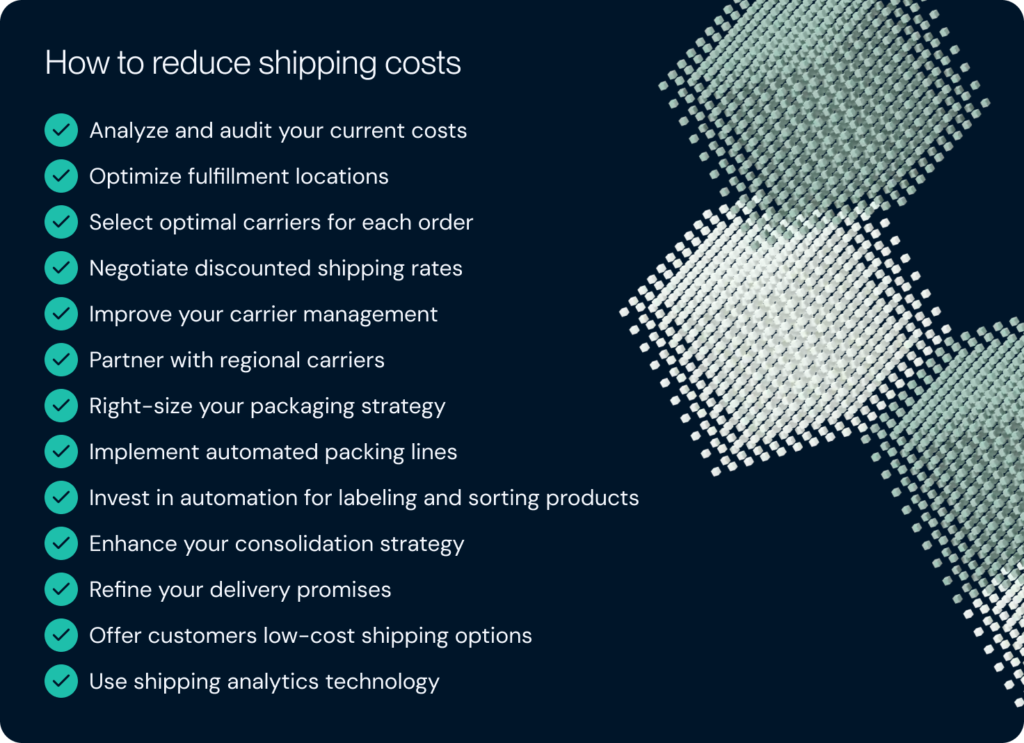
1. Analyze and audit your current costs
To reduce delivery costs, you need a comprehensive understanding of your expenses. Conducting a financial audit will help you pinpoint inefficiencies and identify savings opportunities. Follow these steps:
- Map your current shipping spend and patterns: Understand your shipping process workflow, freight volume, average costs, and geographic distribution.
- Focus on key areas to audit: Analyze your spending in the main areas that factor into your shipping prices, such as carrier contract rates, fulfillment network costs, and packaging.
- Identify cost drivers and inefficiencies: Pinpoint factors like high dimensional weight (DIM) charges, unnecessary surcharges, or suboptimal routes. A structured approach to parcel spend management turns these findings into a repeatable audit instead of a one-time exercise.
- Establish KPIs for measuring improvements: Define key performance indicators (KPIs) such as cost-per-shipment, on-time delivery rates, or customer satisfaction scores to track your progress. Use supply chain analytics to gather insights and monitor these KPIs more accurately over time.
2. Optimize fulfillment locations
Shipping from the wrong location inflates costs and causes ecommerce shipping delays. Strategically placed fulfillment centers reduce the distance your products travel to reach customers. Amazon, for example, has restructured its distribution networks into regional models to place goods closer to consumers, increasing the number of same-day and next-day deliveries while cutting transportation expenses.
To optimize fulfillment center locations and minimize delivery costs:
- Calculate optimal warehouse locations: Use shipping analytics to identify the best places for fulfillment centers based on customer demand patterns and freight volumes.
- Balance inventory across locations: Distribute stock efficiently to ensure availability while minimizing storage and transportation costs.
- Reduce zones and transit times: Minimize the number of shipping zones a package must cross to reduce transit time while ensuring the delivery window is met.
- Zone skipping opportunities: Consolidate shipments into a single bulk delivery to a fulfillment center in a low-cost zone before shipping packages to customers.
3. Select optimal carriers for each order
Every carrier has a different profile, shaped by factors such as their geographic coverage, pricing structures, speed of delivery, and the types of packages they handle most efficiently. Selecting the most cost-effective option for each order helps you minimize costs. You can:
- Compare carrier performance metrics: Evaluate carriers based on delivery speed, reliability, and cost-effectiveness to identify the best-performing options for low-cost shipping.
- Match shipment profiles to carriers: Align the characteristics of each shipment, such as weight, dimensions, and destination, with the carrier that offers the best rates for that profile.
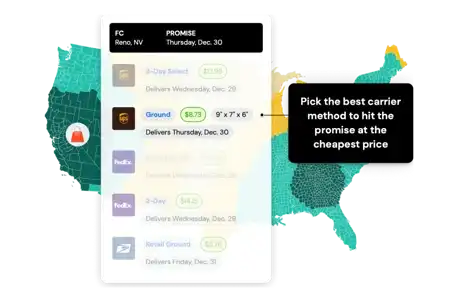
- Automate selection based on cost/service: Compare carriers according to the best shipping delivery dates for your parcels. With a platform like Shipium, you automatically assign carriers based on real-time cost and service-level comparisons, eliminating manual guesswork.
4. Negotiate discounted shipping rates
Most businesses settle for standard carrier agreements, leaving money on the table. Negotiating rates can lead to discounted shipping rates to save on transportation costs. Here’s how:
- Review historical shipping volumes: Analyze past shipping data to understand patterns and demonstrate your business’s value to carriers, helping you access better discounted shipping rates.
- Compare competitive rate structures: Benchmark rates from multiple carriers to identify opportunities for securing discounted rates that align with your shipping needs.
- Build volume-based discount tiers: Consolidate your parcel volumes with a smaller number of shipping carriers to qualify for bulk discounts and secure more favorable rates.
Learn how to negotiate carrier rates with our guide for enterprise shippers.
5. Improve your carrier management
After reaching a service level agreement, tracking your carrier’s performance is equally important to maintain lower shipping costs. Carriers often have variable performance metrics, such as delivery speed, reliability, and accuracy, which can directly impact costs and customer satisfaction. By consistently monitoring this data, you can identify inefficiencies, negotiate better terms, and even switch carriers if needed. See how:
- Track carrier performance data: Frequently check your carrier’s performance data to avoid missed SLAs and refund claims.
- Implement real-time tracking: Enable proactive issue resolution, such as rerouting delayed shipments or prioritizing high-value orders, by using live transit data. For example, if a carrier reports a delay, you can immediately reassign the shipment to another carrier to meet customer expectations and minimize shipping costs.
- Standardize carrier communications: Use consistent communication protocols across carriers to ensure reliable updates, quicker resolutions, and uniform service quality. For instance, standardize shipment updates like “in transit” or “delivered,” establish SLA tracking dashboards to monitor on-time performance, and set up alerts for issues such as delays or damaged packages.
Explore how carrier management impacts your overall ecommerce efficiency.
6. Partner with regional carriers
National carriers like FedEx and UPS dominate the market but often charge premiums for remote deliveries. Partnering with regional carriers provides flexibility and many other benefits, such as:
- Access to specialized regional advantages: Regional carriers often have expertise in local delivery nuances, helping ensure timely and cost-effective deliveries.
- Matching small carriers to zone coverage: Use carriers that specialize in specific zones to optimize coverage and reduce transit times.
- Use regional rate benefits: Local carriers typically offer lower rates for last-mile delivery compared to national providers, which can help you reduce delivery costs.
7. Right-size your packaging strategy
Packaging is often overlooked but plays a massive role in shipping costs. According to DHL, packaging is often 40% too large for its contents, requiring extra room and more vehicles than necessary for transportation. To avoid mismanagement and inflated packaging prices:
- Reduce dimensional weight charges: An item’s dimensional weight (DIM) factors in a package’s size and weight. Selecting boxes that match the dimensions required for your typical shipments helps minimize excess volume and avoid unnecessary DIM surcharges.
- Minimize void fill usage: Reducing the use of filler materials, such as bubble wrap or packing paper, not only minimizes shipping costs but is also a great eco-friendly practice.
- Standardize sizes: Create a range of box sizes tailored to your common shipment dimensions. Standardization simplifies warehouse operations, speeds up packing processes, and ensures your inventory of packaging materials is cost-efficient, optimizing your profit margin and bottom line.
- Choose appropriate packing materials: Use lightweight yet durable materials to protect items without adding unnecessary weight. Consider alternatives like corrugated cardboard or compostable mailers, which balance cost-effectiveness with sustainability.
See how our Packaging Planner API can help you optimize your cartonization strategy.
8. Implement automated packing lines
Automated packing lines can help you save money on shipping while improving order accuracy. Automation minimizes errors, reduces material waste, and increases throughput by reducing manual labor and speeding up packaging processes. To optimize your packing lines, you can:
- Integrate dimensioning systems: Automatically measure package dimensions to choose the smallest, most cost-efficient packaging.
- Standardize packaging materials: Use uniform materials and box sizes to simplify packing and cut down costs.
- Streamline workflows: Design efficient packing station layouts to reduce handling times and maximize labor productivity.
Ensure that your 3PLs and other fulfillment partners leverage automated packing lines to maintain efficiency and control costs across your entire network.
Read how Shipium’s Pack App helps associates apply the right carrier and service at the pack station.
9. Invest in automation for labeling and sorting products
Automation ensures that labels are applied correctly and packages are sorted efficiently, reducing the risk of delivery errors and chargebacks. To maximize benefits and get a lower shipping cost, you can:
- Adopt automated labeling machines: Quickly and accurately apply shipping labels at scale without manual intervention.
- Integrate smart sorting systems: Use conveyor-based or robotic sorters to route parcels by destination, service level, or carrier.
- Implement real-time error detection: Automatically verify label accuracy and package routing before parcels leave your facility.
Your 3PLs need to be equipped with shipping automation software for labeling and sorting, so your network can scale efficiently without introducing manual risks or extra costs.
10. Enhance your consolidation strategy
Consolidated shipments are one of the best tactics to decrease shipping costs because it helps to minimize the underutilization of truckloads.
To put consolidation to work, you can:
- Group multiple orders when possible: Combine several orders from the same customer or destination into a single shipment. This procedure reduces the number of packages and lowers overall shipping expenses.
- Balance speed versus consolidation: While consolidation saves costs, it might lead to longer delivery times. To maximize both savings and customer satisfaction, you should evaluate when speed is critical versus when slower, consolidated shipping is acceptable.
- Set smart consolidation thresholds: Define rules for when to consolidate orders based on their value, weight, or shipping destination. For instance, you can group parcels that are under a certain weight or value to minimize excess costs.
Consolidation done right also means avoiding split shipments that quietly inflate your per-order cost.
11. Refine your delivery promises
While customers demand fast delivery, it’s important to align promises with operational capabilities for your ecommerce business’s sustainability while you minimize shipping costs.
Here’s how to ensure you meet customer expectations while avoiding unnecessary expenses and disruptions:
- Match promises to carrier service levels: Align the delivery dates you offer with the actual capabilities of your carriers to avoid missed SLAs and penalties.
- Monitor promise performance: Regularly track how well your delivery timelines are being met. Use this data to identify and address discrepancies that might harm customer satisfaction and be costly to your business.
Shipium, for example, integrates real-time data from your inventory, carriers, and fulfillment network to calculate precise estimated delivery dates (EDDs). Using these insights, our platform ensures your delivery promises are both achievable and optimized for cost-efficiency.
12. Offer customers low-cost shipping options
Customer-centric fulfillment isn’t just about speed. Offering low-cost shipping options helps you keep expenses in check. Here’s how to reduce shipping costs by giving customers more choice:
- Structure tiered options: Provide multiple choices such as free standard shipping, economy shipping methods, flat-rate shipping, or expedited paid options. This tactic allows customers to select based on their priorities, whether it’s speed or cost.
- Balance cost with delivery speed: Optimize how you ship parcels to offer affordable options. For example, use ground shipping for standard deliveries and reserve premium carriers for time-sensitive orders. Encourage customers to choose cost-effective shipping methods by offering perks, such as discounts or loyalty points.
13. Use shipping analytics technology
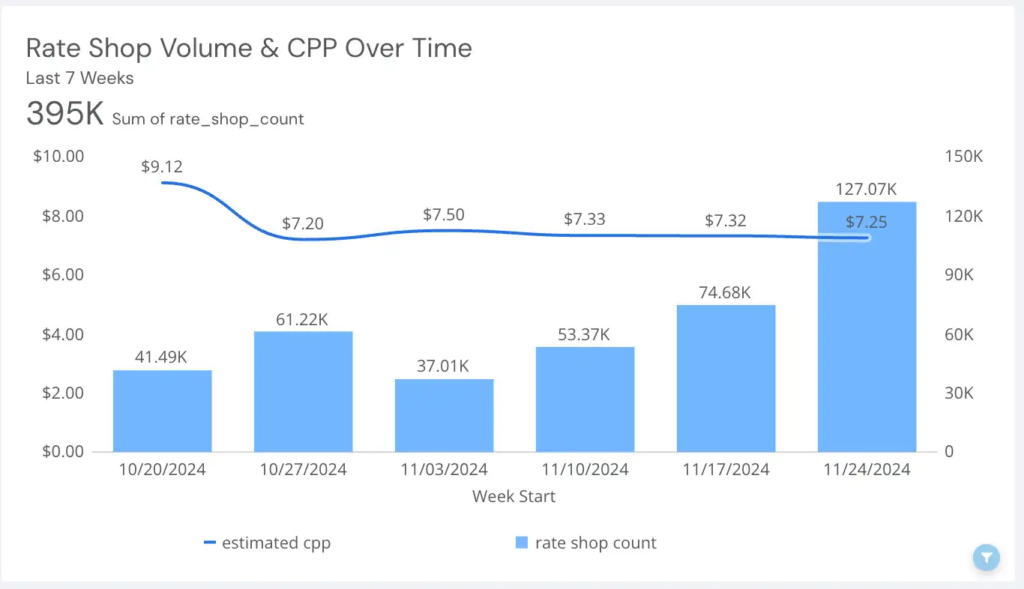
Shipping analytics technology enables logistics leaders to make smarter decisions on how to decrease shipping costs by implementing data-driven insights. Instead of relying on guesswork, analytics platforms reveal trends, inefficiencies, and optimization opportunities across your shipping network.
To fully take advantage of shipping intelligence, you can:
- Track carrier performance: Monitor on-time rates, surcharges, and delivery accuracy to negotiate better contracts.
- Analyze cost drivers: Identify key factors like package size, zone distribution, and carrier mix that impact costs the most.
- Run predictive simulations: Model “what-if” scenarios to forecast the impact of different shipping strategies before making changes.
See how Shipium’s Orca AI analyzes trends, uncovers root causes, and creates powerful visualizations using our groundbreaking AI engine.
How much can you save by reducing shipping costs?
The savings you can experience by reducing shipping costs depend on where the waste sits, but three areas can have a significant impact:
- Carrier and service selection: Different carriers and service levels have different rates, so choosing the most cost-effective option for each shipment can reduce unnecessary spend.
- Packaging: Oversized packaging can increase dimensional weight and trigger higher shipping charges, while right-sizing helps reduce those costs.
- Origin choice: Shipping from a fulfillment location closer to the customer can reduce zones, transit time, and transportation costs.
Shipium customers cut parcel spend by an average of 12% once selection, routing, and fulfillment decisions run through one platform. Here’s how to translate that percentage into a number for your business:
Estimate your savings from annual parcel spend
Use your annual parcel spend to model potential savings at different reduction rates. For example, a 10% to 12% reduction on $20 million in annual parcel spend would represent $2 million to $2.4 million in savings. Break the number down by lane, carrier, and service level so you know which changes pay for themselves first.
Separate one-time savings from savings that compound
A renegotiated carrier contract or a packaging redesign delivers a one-time step change. Automated carrier selection and dynamic origin routing compound every day the network runs, because each order gets the cheapest option that still hits the promised date. You see the largest gains from the structural changes, since they scale with your volume instead of resetting at the next contract cycle.
How do carriers calculate shipping costs?
Carriers calculate shipping costs by billing the greater of a package’s actual weight or its dimensional weight, then adjust the rate for the distance the parcel travels. Main cost drivers include:
| Shipping cost driver | What the cost driver measures | How to reduce it within your shipping operations |
|---|---|---|
| Dimensional weight | Billable weight from box size (L × W × H ÷ carrier’s DIM divisor | Right-size boxes, cut void fill, standardize dimensions |
| Shipping zone | Distance from origin to destination ZIP | Add fulfillment origins closer to demand, zone skip |
| Base rate and GRI | Annual carrier list-rate increase | Rate shop across carriers, renegotiate on volume |
| Accessorials | Residential, fuel, address correction, peak fees | Validate addresses upstream, track fully loaded cost |
| Service level | Speed tier billed per shipment | Downgrade to the slowest speed that hits the promise |
Let’s look at how dimensional weight, shipping zones, base rates, accessorial fees, and service levels affect your shipping costs.
Dimensional weight and the DIM divisor
Dimensional weight converts a package’s size into a billable weight by multiplying length, width, and height, then dividing by a carrier’s DIM divisor. A large, light parcel bills on its dimensional weight rather than what the scale reads, which is why right-sizing a box directly lowers the rate. Audit your average DIM divisor across contracts, since a better divisor cuts the billable weight on every oversized shipment.
Shipium Packaging Optimization models every SKU’s dimensions against your box catalog and flags the right-size opportunity before a shipment goes out.
Zones and the distance a parcel travels
Carriers divide the country into zones based on the distance between the origin and destination ZIP codes, ranging from zone 2 for regional deliveries to zone 8 for coast-to-coast deliveries. Each additional zone raises the base rate. Shipping from an origin closer to the customer, or injecting consolidated volume deeper into the network, collapses zones and cuts the per-parcel cost, a tactic commonly known as zone skipping.
Shipium Route Optimization helps you choose the origin and timing that ships across fewer zones for that order.
Base rate and the annual GRI
Carriers raise their base rates each year through a general rate increase (GRI), published in the fall for the following year. That number understates the real impact, since it excludes surcharges. You’ll likely see your actual costs climb beyond the GRI once accessorials are factored in.
For example, residential delivery surcharges are rising from $6.55 to $6.95, and additional handling fees on Zone 2 packages from $43.50 to $46, in FedEx’s 2026 rate changes, both around 6%, moving independently of the base rate. If you’re only comparing carriers on their headline GRI, increases like these won’t show up until the invoice does.
Rate shopping across carriers and renegotiating on volume are the two levers that offset a GRI you can’t avoid.
Accessorials that inflate the invoice
Accessorial fees (residential delivery, address correction, fuel, and peak surcharges) stack on top of the base rate. They often aren’t included in cost comparisons, since they’re billed separately from the quoted rate. Track fully loaded cost per shipment, not just the base rate. With solid 3PL billing management, fees surface early enough for you to act on them. Validating addresses upstream, for instance, avoids a correction fee entirely.
Service level and delivery speed
Each speed tier, whether ground, two-day, or next-day, carries its own rate table, and the fastest option isn’t always the one your delivery promise requires. Matching the service level to the actual promise, rather than defaulting to a faster tier, is often the simplest cost lever available.
Reduce your shipping costs with the Shipium platform
Legacy systems often lack the agility to support cost-saving shipping strategies. Shipium’s modern, end-to-end shipping management system integrates directly into your existing ecosystem, boosting efficiency and reducing costs.
Shipium helps you drive savings with:
- Dynamic carrier selection: Automatically choose the best carrier for each shipment based on cost, delivery speed, and volume balancing.
- Simulation tools: Predict the impact of network changes, including carrier or route adjustments, on overall shipping costs before implementation.
- Data-driven insights: Use proprietary machine learning and AI to continuously optimize logistics operations, providing predictive analytics that empower intelligent supply chain decision-making.
Book a demo today and discover how to reduce shipping costs with Shipium.
Frequently asked questions
What is the fastest way to reduce shipping costs?
One of the fastest ways to reduce shipping costs is automated carrier selection, which assigns each order the cheapest carrier and service that still meets the promised delivery date. Manual rate shopping across a multi-carrier network cannot keep pace at enterprise volume. A solution like Shipium Rating Engine compares fully loaded rates in real time and removes the guesswork.
Does reducing returns lower shipping costs?
Yes, reducing return volume minimizes your cost, since every return doubles the shipping spend on that order. Tightening product descriptions, sizing guides, and packaging quality to cut avoidable returns is one of the lowest-effort ways to protect shipping-cost savings you’ve already made elsewhere.
Explore our guide to ecommerce returns management.
How can I optimize shipping costs in my supply chain?
To optimize shipping costs in your supply chain, implement parcel management that balances transportation spend against delivery speed, reliability, and customer expectations so each shipment uses the best-value option for the required service level.
Here’s how to reduce shipping costs in your supply chain:
- Match shipping mode to the shipment profile: Use small parcel or LTL based on shipment size, destination, and service requirements rather than defaulting to one mode.
- Position inventory closer to demand: Reduce shipping zones and transit times while limiting the need for unnecessary expedited services.
- Compare fully loaded carrier costs: Evaluate base rates, surcharges, service levels, and delivery performance together, not selecting carriers based on quoted rates alone.
- Track cost and service performance: Monitor results by carrier, lane, and service level to identify where additional spend improves outcomes and where it does not.
Discover how Shipium’s Parcel Shipping Software helps orchestrate carriers, services, and fulfillment nodes from one decision layer.
Does packaging really affect shipping costs?
Packaging affects shipping costs directly through dimensional weight, which bills a parcel on the space it occupies rather than what it weighs. Right-sizing boxes, cutting void fill, and standardizing dimensions reduce billable weight and DIM surcharges on every oversized shipment.
Because carriers bill the greater of actual or dimensional weight, a smaller box on a light product can lower the rate without changing anything else in the order.
Learn how to reduce packaging costs for your shipping operation.
How does Shipium help minimize shipping costs?
Shipium helps minimize shipping costs by using automated carrier rate shopping, fulfillment routing, and delivery-date logic to select the lowest fully loaded-cost option that can still meet the customer promise. It evaluates eligible carriers and services, surcharges, transit-time estimates, inventory and fulfillment locations, and business rules before executing the shipment.
See how Shipium helps customers reduce costs, improve customer experience, and eliminate technical headaches.
Does offering free shipping change your shipping costs?
Free shipping can lower cart abandonment, but it only reduces your effective shipping cost when the average order value covers the expense. Set your free-shipping threshold above your current AOV, so the incentive drives larger orders instead of absorbing cost on every sale.
Explore our guide to the best ecommerce shipping options.
-
 Read more
How to Future-Proof Your 3PL Ecommerce Fulfillment Strategy
The role of third-party logistics (3PL) ecommerce fulfillment has changed. What was once a…
-
Read more
Delivery Promise: Maintaining Accurate Estimates
Today’s ecommerce customers aren’t just looking for fast shipping — they want confidence in…
-
Read more
7 Key Steps to Efficient Parcel Spend Management
Ecommerce parcel cost represents a large portion of the expenses that chip away at…