
Parcel Management Software
Shipium’s parcel management software runs your carrier network, labels, and volume commitments from one platform, so parcel decisions hold across every fulfillment site.
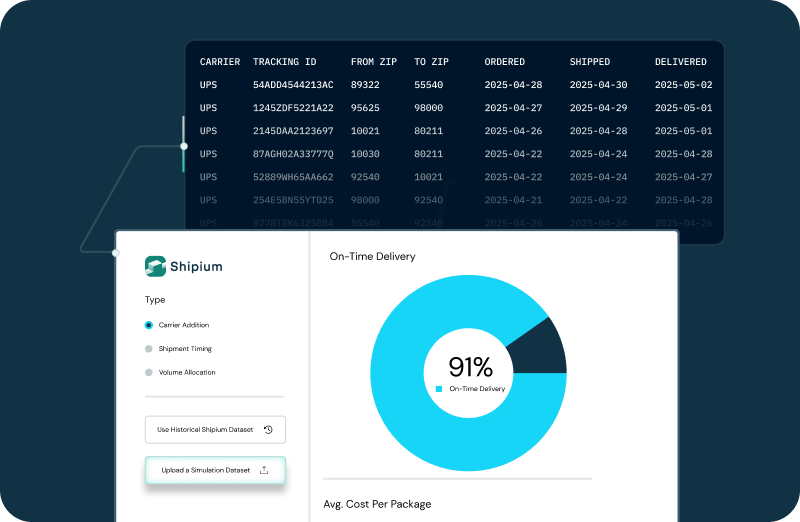
Every carrier, service, and parcel under one configuration
Operators add carriers mid-season, retune rates, and defend discount tiers. Our parcel management solution carries each change into the next shipment.
Carrier network
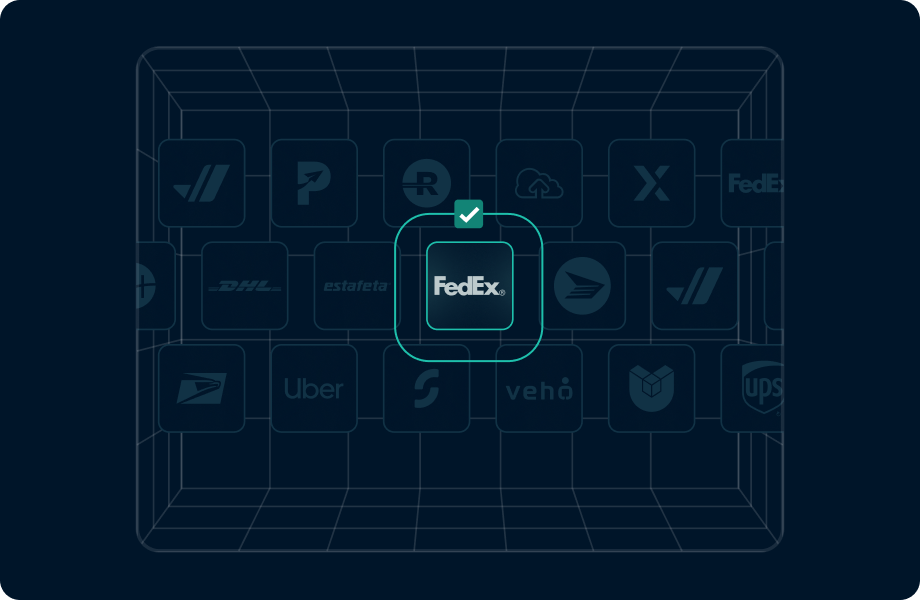
Shipium’s pre-integrated network covers national, regional, and same-day carriers. Turning on any of those carriers takes an afternoon, not an integration project.
Service methods and labels
In one label setup, Shipium generates and voids labels in bulk, adds handling properties like signature or perishable, and applies a different logo per tenant.

Volume commitments
Shipium monitors volume hourly against your carrier targets, then adds selection modifiers when one carrier drifts off pace. Your contracted rates stay untouched.

Parcels in transit
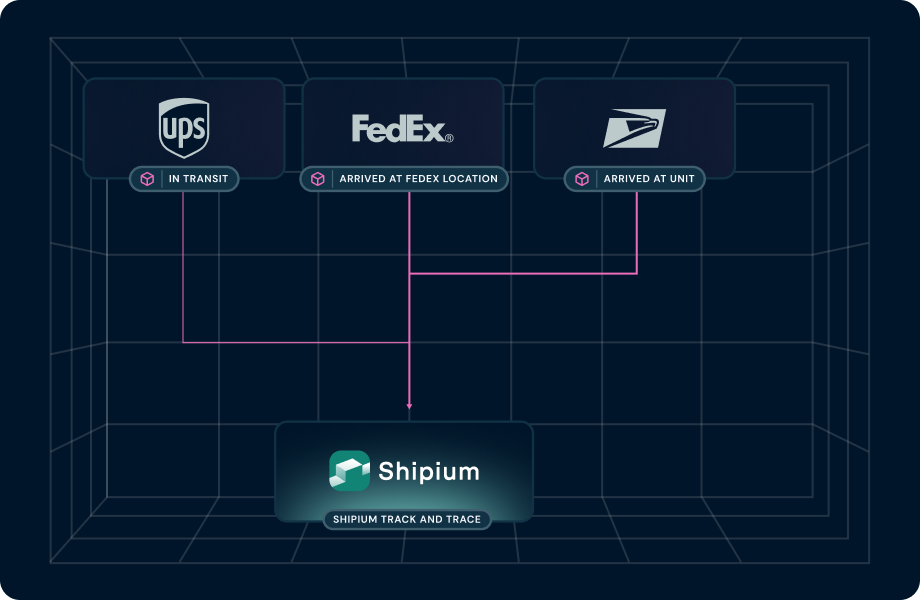
From every carrier API, Shipium pulls tracking events into one standardized status feed, so support and customers read the same record.
Carrier decisions that cost less and change faster
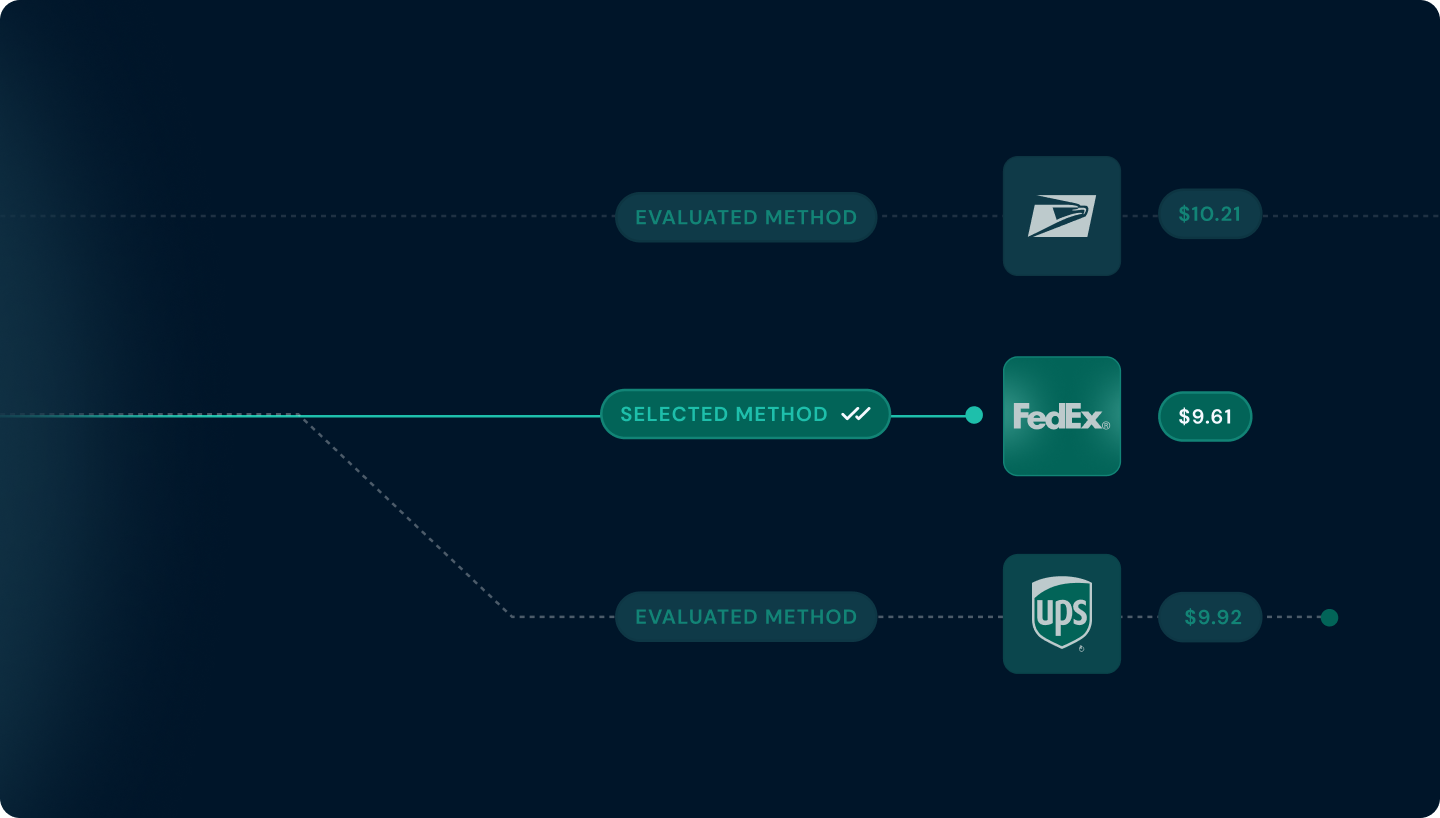
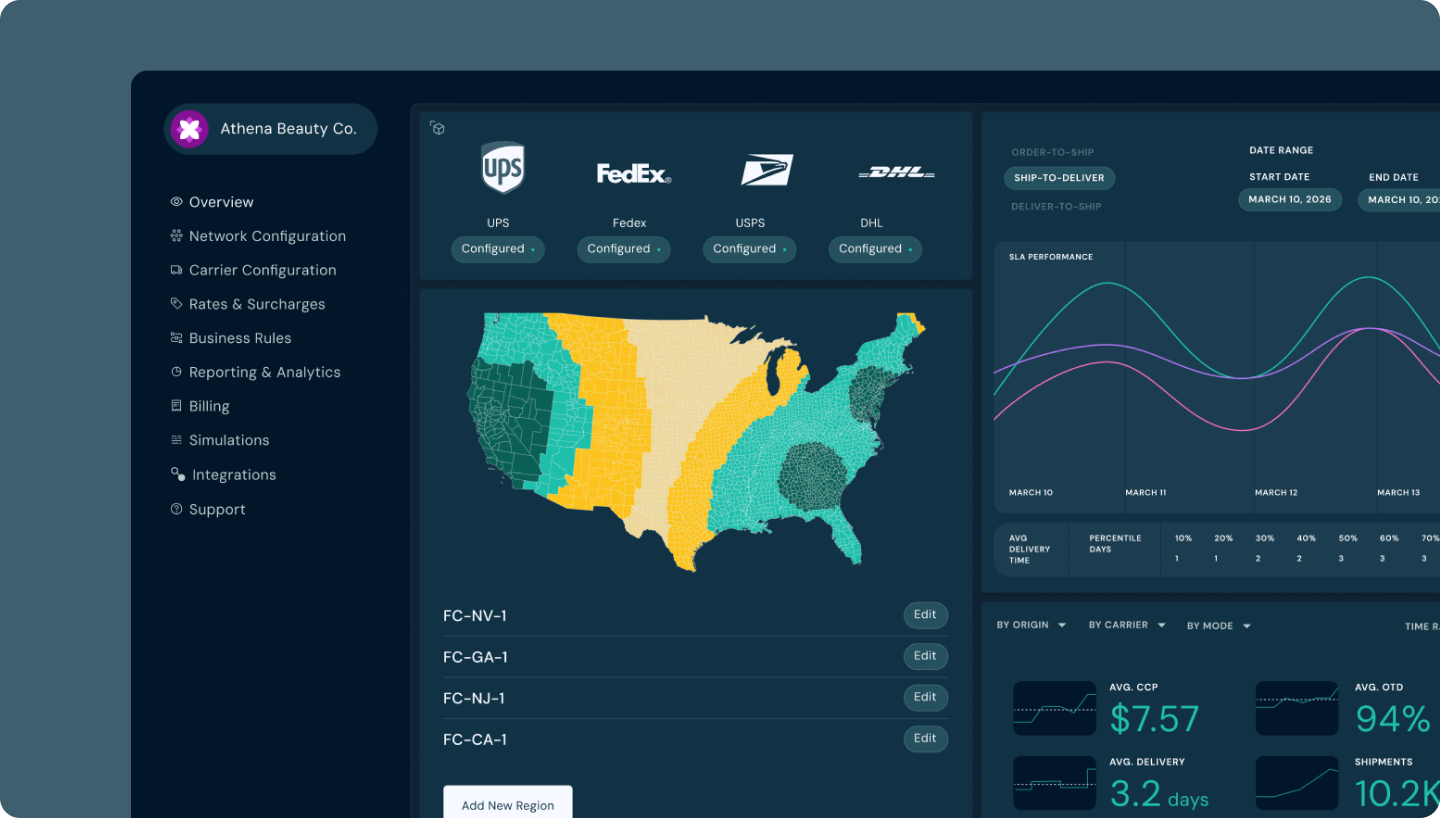
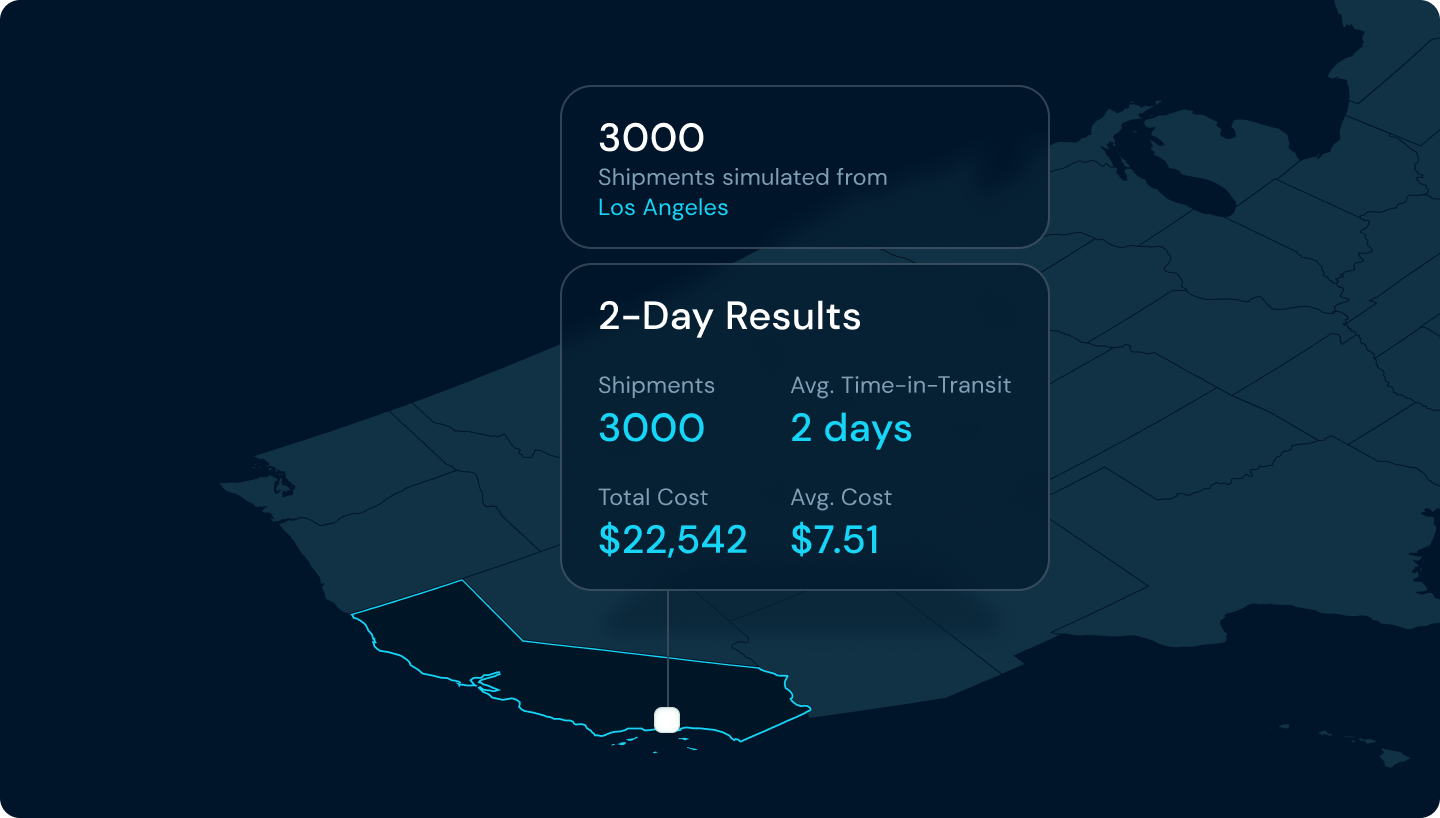
Shipium shows operators what each carrier actually costs, lets them change the rules themselves, and models a network move before it touches a live parcel.
Lower cost per package
Across every eligible carrier and service, Shipium compares fully loaded rates with surcharges included. Customers experience 12% savings on average.
Faster carrier and rule changes
Shipium keeps carrier setup, rates, and business rules in a self-service console, so operators own the change without filing a request with IT.
Safer network moves
Before you commit, Shipium models a carrier addition, a ground-service shift, or a new origin against your historical shipment data.
Frequently asked questions
What is parcel management, and what makes it different at enterprise scale?
Parcel management is the work of running small-package shipping across carriers: onboarding carriers, maintaining rates and service methods, allocating volume, generating labels, and tracking parcels to delivery.
At enterprise scale, here’s what impacts parcel management:
- Carrier count grows past what one team configures by hand.
- Contract tiers create a penalty for guessing wrong.
- Every new fulfillment site adds another version of the same rules.
Shipium keeps carrier contract management terms, service methods, and per-origin rules in the platform that executes the shipment, so adding the tenth carrier or the tenth fulfillment site extends the setup you already run.
What is a multi-carrier parcel management solution?
A multi-carrier parcel management solution is software that runs one shipping process across several carriers at once, comparing them on each shipment rather than defaulting to a primary. The value shows up when a carrier underperforms a lane or a regional provider undercuts a national rate, because the comparison already runs on every parcel.
Check out the best multi carrier parcel management solutions.
How do you manage multi-carrier parcel shipping at scale?
You manage multi-carrier parcel shipping at scale by letting software pick the carrier on every shipment, so the choice stops depending on which site packed the order.
Your multi-carrier parcel management software should:
- Compare on every shipment: Price and score each eligible carrier and service against the date you promised.
- Watch the commitments: Volume targets drift through the year, and a missed tier costs the discount you negotiated.
- Normalize the records: Carriers report scans and surcharges differently, so one schema has to precede any comparison.
Shipium compares carriers, tracks volume commitments, and normalizes carrier records inside the platform that rates and labels the parcel. A cheaper service wins only when it still hits the delivery promise the customer saw at checkout.
What should you look for in an enterprise parcel management platform?
An enterprise parcel management platform should cover carrier onboarding, rate and contract modeling, service selection, label generation, volume allocation, and tracking consolidation in one system.
Throughput is the first thing to verify, because a platform that stalls at your volume fails on the day it matters most. Shipium’s cloud-native architecture, for example, supports enterprises with more than 100 million annual shipments.
Change speed matters as much, because peak week does not wait for a release cycle. Shipium’s API-first integration framework connects to the systems of record you already run, so nothing gets rebuilt to adopt it.
What is the best software to automate carrier selection and label generation?
The best software to automate carrier selection and label generation returns both in one call, so the rate, the chosen service, and the label come back together instead of in three steps.
Splitting carrier selection and label generation costs accuracy. When labeling runs separately from rating, a label can carry a service the rate shopping engine did not choose, and the mismatch surfaces on the carrier invoice weeks later.
Shipium rates, selects, and labels in a single request, with sub-second response times on the comparison. Our ship-ai models pick the service predicted to hit the delivery date.