
Wrong carrier picks cost margins on every package, and missed delivery dates weaken your case when a client contract comes up for renewal. The right shipping management software selects the carrier, sets an exact delivery date, and controls parcel spend on every order before it leaves the dock.
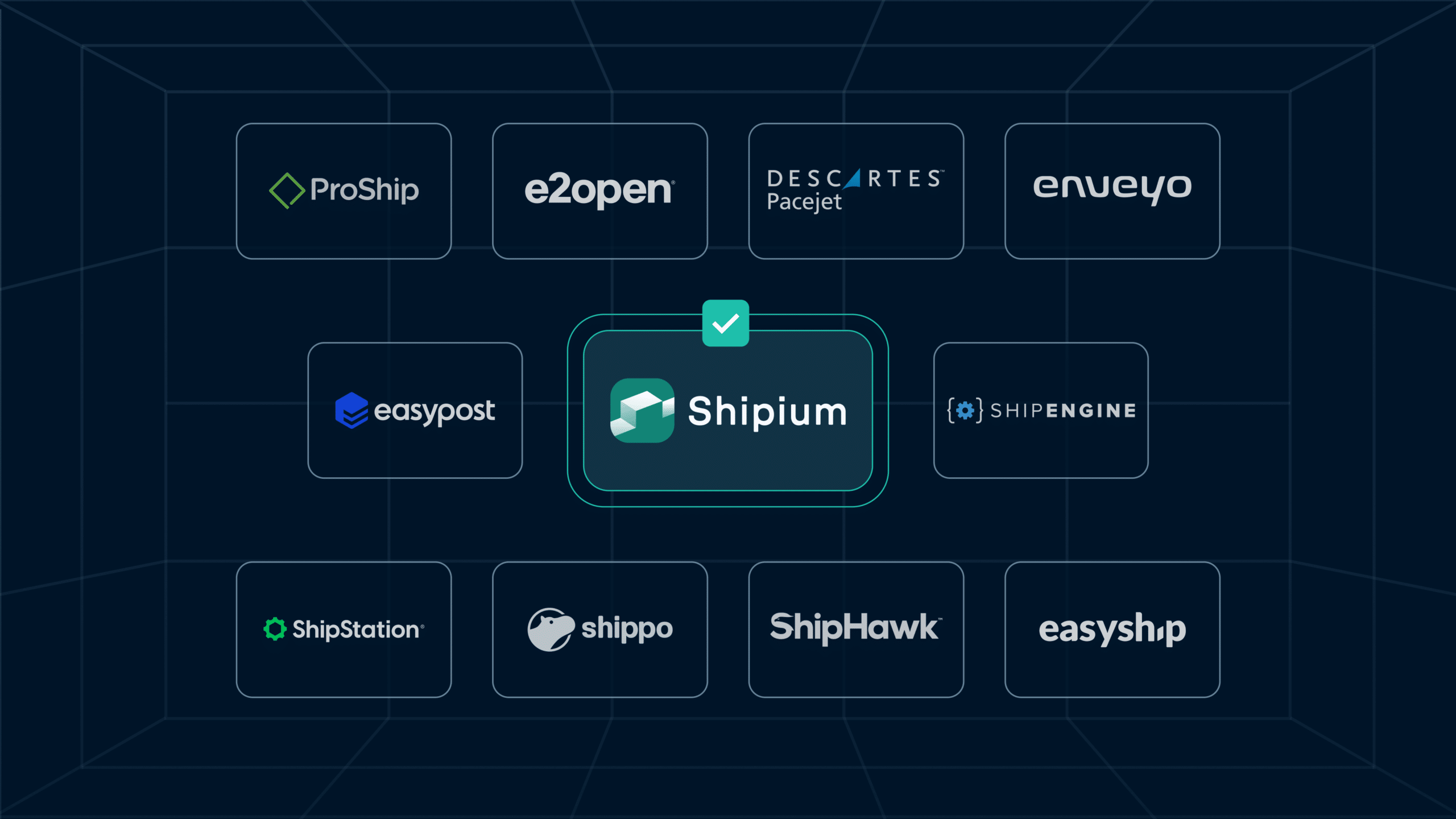
In this guide, we compare 11 platforms on carrier selection, delivery date accuracy, and parcel cost control, then show you how to evaluate them against your own network. Start with this quick-reference table of standout options, then read the full breakdown.
| Shipping management system | Best use case | Key features | Review score* |
|---|---|---|---|
| Shipium | High-volume enterprise shippers with multi-node networks | Machine learning carrier selection, fully loaded rate shopping, exact delivery dates, network simulation | 4.9 |
| ProShip | Enterprise shippers that need parcel and LTL in one system | Multi carrier rating, manifesting, WMS and ERP connectors | 3.9 |
| EasyPost | Developers building shipping into their own software | REST API, 100+ carrier connections, label and tracking endpoints | 4.2 |
| ShipStation | Small and mid-size ecommerce sellers | Marketplace integrations, batch labels, automation rules | 4.3 |
| ShipHawk | Mid-market shippers that want warehouse and shipping workflows in one system | Parcel and LTL rate shopping, warehouse management, automated carrier selection | 4.3 |
*Review scores reflect G2 star ratings as of November 2026. G2 scores fluctuate based on real-time user feedback.

What is shipping management software?
Shipping management software is a system that decides how each outbound order moves from your warehouse to the customer. The software rates eligible carriers and services, prints a compliant label, and records tracking events after pickup.

Enterprise shipping platforms choose the carrier and service for each package. The software weighs cost against the promised delivery date and applies your business rules before the label prints. It sends shipment tracking updates to your order system and your clients.
For a 3PL, a shipment management system also has to keep each client’s data separate. Every brand you serve brings its own carrier contracts, service-level agreements, and billing terms, so the platform has to apply the right rules to the right client on every order.
11 best shipping management software platforms
The best software for shipping management depends on in-house engineering capacity, carrier mix, and the order and warehouse systems already in place. The list runs from enterprise orchestration platforms to mid-market warehouse and shipping suites, developer APIs, and small-seller tools, so match each entry to your volume and network before you shortlist.
1. Shipium: Best for high-volume enterprise shippers with multi-node networks
Shipium is a shipping management system for enterprise retailers, brands, and 3PLs that move parcels from many warehouses, stores, and fulfillment nodes.
Our Rating Engine solution compares fully loaded rates across 60+ carriers, including contracted discounts, surcharges, and accessorials. Machine learning models trained on more than 350 million shipments predict transit times per carrier, lane, and node, so you can hit your promised delivery date.
Operations teams can manage carrier setup, rules, and reporting in a web console without filing IT tickets. Our AI models feed carrier selection, delivery dates, and order routing from the same data, so the date your client shows at checkout matches the carrier your warehouse picks.
| Shipium pros | Cons of Shipium |
|---|---|
|
|
2. ProShip: Best for enterprise shippers that need parcel and LTL in one system
ProShip is a multi carrier shipping system for large distribution operations. The software connects to a warehouse management system (WMS), order management system (OMS), transportation management system (TMS), and enterprise resource planning (ERP) platform.
ProShip handles carrier onboarding, rating, labeling, and manifesting for parcel and less-than-truckload (LTL) freight in one place.
| ProShip pros | Cons of ProShip |
|---|---|
|
|
3. e2open Global Parcel: Best for global shippers already using the e2open supply chain suite
e2open Global Parcel (built on Logistyx Technologies, which e2open acquired in 2022) is a multi carrier SaaS application for shippers that send parcels across several countries. The application covers rating, labeling, tracking, and invoicing, and generates compliance documents for domestic, international, and special-handling shipments.
Shippers with planning, procurement, or trade management modules from e2open get parcel execution inside the same vendor relationship.
| e2open Global Parcel pros | Cons of e2open Global Parcel |
|---|---|
|
|
4. Descartes Pacejet: Best for manufacturers and distributors running an ERP
Descartes Pacejet is a cloud shipping platform that runs inside ERP order workflows, integrating with Oracle NetSuite, Microsoft Dynamics 365, Acumatica, Infor CloudSuite Industrial, IFS, and Sage X3.
Manufacturers and B2B distributors use Pacejet to compare parcel and LTL options, print labels at scan-and-pack stations, and write freight costs back to the sales order.
| Descartes Pacejet pros | Cons of Descartes Pacejet |
|---|---|
|
|
5. Enveyo: Best for enterprise shippers and 3PLs focused on parcel audit and cost analysis
Enveyo combines multi carrier shipping, parcel and freight audit, cost modeling, and analytics, and pulls carrier, TMS, and ERP data into one dataset for invoice review and reporting.
Shippers and 3PLs use Enveyo to find invoice errors, model contract changes, and report cost per package by client or lane.
| Enveyo pros | Cons of Enveyo |
|---|---|
|
|
6. EasyPost: Best for developers building shipping into their own software
EasyPost is a multi carrier shipping API that connects to 100+ carriers, including USPS, UPS, FedEx, and DHL, through one REST interface. Engineering teams call EasyPost endpoints for rates, labels, tracking, and address verification and build the user interface themselves.
| EasyPost pros | Cons of EasyPost |
|---|---|
|
|
7. ShipEngine: Best for software platforms that embed shipping APIs
ShipEngine is a shipping API from the Auctane family. Order management, marketplace, and warehouse software providers embed ShipEngine to give their own users rate quotes, labels, tracking, and address validation across national and regional carriers without building carrier connections themselves.
| ShipEngine pros | Cons of ShipEngine |
|---|---|
|
|
8. ShipStation: Best for small and mid-size ecommerce sellers
ShipStation is a web-based shipping tool for online sellers that pulls orders from marketplaces and storefronts. Sellers print labels in batches, apply automation rules to assign services, and send tracking emails to buyers.
| ShipStation pros | Cons of ShipStation |
|---|---|
|
|
9. Shippo: Best for small businesses that want discounted carrier rates
Shippo gives small businesses access to discounted rates from carriers such as USPS, UPS, and DHL Express through a web app and an API. Sellers compare rates, buy labels, and generate return labels from one account.
| Shippo pros | Cons of Shippo |
|---|---|
|
|
10. ShipHawk: Best for mid-market shippers that want warehouse and shipping workflows in one system
ShipHawk is a cloud shipping and warehouse management platform for retailers, wholesalers, and distributors that ship both parcel and LTL freight. Teams rate shop parcel and LTL carriers in one place and let business rules pick the carrier and service for each shipment.
ShipHawk connects to ecommerce and ERP systems such as NetSuite, Shopify, and Adobe Commerce, so orders flow into picking, packing, and labeling without manual entry.
| ShipHawk pros | Cons of ShipHawk |
|---|---|
|
|
11. Easyship: Best for small sellers shipping internationally
Easyship helps small online sellers compare international courier options and show landed costs, including duties and taxes, at checkout. The platform generates customs documents and labels and syncs orders from common storefronts.
| Easyship pros | Cons of Easyship |
|---|---|
|
|
Why do high-volume shippers need shipment management software?
High-volume shippers need shipment management software because static carrier rules lose accuracy as daily order counts rise, and U.S. ecommerce sales continue to increase.
According to the Census Bureau’s quarterly ecommerce report, U.S. retail ecommerce sales reached $340.2 billion in the second quarter of 2026, up 12.2% from the second quarter of 2025. For 3PLs, that growth means more orders spread across more client accounts.
Static carrier rules written for a few thousand packages a day create problems as volume grows:
- Missed savings: Cheaper services that meet the promised date go unused.
- Carrier overload: One carrier receives more volume than its pickup capacity can handle.
- Late deliveries: Orders arrive after the delivery date shown at checkout.
- Billing mismatches: Clients receive pass-through charges that differ from what the carrier invoiced, a gap that 3PL billing management closes with cost data drawn from each shipment.
Automated platforms make carrier and service decisions per package in under a second. Your team sets the goals, such as a delivery date or a cost ceiling, and the system applies them to every order across every warehouse.
Features to look for in shipping management software

The features to look for in shipping management software include multi carrier connectivity, fully loaded rate shopping, predictive transit times, editable business rules, and decision-level analytics. Each feature affects how much you pay per package and how often you keep a delivery promise.
1. Multi carrier support with a pre-integrated carrier network
A pre-integrated carrier network means the vendor has already built and certified label, rating, and tracking connections to each carrier. You activate a carrier with your account credentials and skip months of integration work. Look for coverage of national carriers, USPS, and regional last-mile carriers in your delivery zones.
2. Fully loaded rate shopping across carriers and services
Fully loaded rate shopping compares the total billed cost of each eligible service, including fuel, residential, delivery area, and handling surcharges. Base-rate comparisons hide those fees until the invoice arrives.
Fuel costs change more often than base rates. The FedEx fuel surcharge table adjusts rates on FedEx Ground and FedEx Home Delivery shipments every week to track the national U.S. average diesel price, so two identical packages shipped a month apart can carry different totals.
A platform built for fully loaded rate shopping models contracted discounts and accessorials per package, so the cheapest quote matches the cheapest bill.
3. Predictive transit times for exact delivery dates
Predictive transit times estimate when a package will arrive based on carrier performance by lane, pickup times at each node, and current network conditions. Carriers publish one transit time per service in their delivery service-level agreements (SLAs), but actual arrival often lands earlier or later on any given day.
Exact dates matter at checkout and in client reporting. Accurate delivery promises at checkout give shoppers a firm arrival day, and the same prediction tells carrier selection which slower, cheaper service still arrives on time.
4. Business rules that operations teams can change
Business rules decide which carriers qualify for a package based on attributes such as weight, destination, client, or order value. Your operations team needs to edit those rules the same day a carrier misses pickups or a client changes its service level.
Ask shipping management software vendors who edits rules after go-live and how long a change takes. A configurable rules engine lets an operator exclude a carrier for one zone or force signature service for one client without a code release.
5. Analytics that explain each carrier decision
Shipping analytics should show which carrier the platform picked for each package and why it won. Reports that stop at total spend leave your team unable to explain a cost jump to finance or a client.
Look for reports on carrier mix, cost per package, on-time rate by carrier and lane, and the alternatives the system rejected. Decision-level shipping analytics connect each outcome to the rule or model that produced it.
Explore our shipping analytics software.
How to choose the right shipping management system
To choose the right shipping management system, judge each vendor by how it would run your network day to day. When comparing options for a 3PL shipping platform:
- Test the platform on your own shipping data before you sign: Send each finalist 30 to 90 days of package history and request a rate and carrier-mix analysis. Ask whether the vendor can simulate your network, so you see projected cost and on-time rate for a new carrier or node before you commit.
- Check how delivery dates are calculated: Ask whether the platform uses static carrier SLAs or a model trained on actual scans. Request on-time accuracy from last peak season, and ask how delivery date enhancement adjusts dates for weather and carrier delays.
- Ask who makes changes after go-live: Find out whether your operators update rules, carriers, and rates themselves or wait on vendor services. When operators can make those changes in the platform themselves, a carrier issue gets fixed the same day.
- Confirm how the platform connects to your systems and carriers: List your WMS, OMS, and ERP and ask for live customer references on each. Prebuilt partnerships shorten implementation for warehouses on that system.
This table recaps all 11 platforms side by side across pricing model, built-for use case, and standout differentiator, so you match a shortlist to your needs at a glance:
| Multi carrier shipping software solution | Pricing model | Built for | Standout differentiator |
|---|---|---|---|
| Shipium | Custom enterprise quote | Enterprise shippers and 3PLs with multiple nodes | Machine learning transit-time models and invoice-accurate rating across 60+ carriers |
| ProShip | Annual subscription by quote | Large distribution operations | Parcel and LTL execution in one system |
| e2open Global Parcel | Custom quote | Global e2open suite customers | 550+ global carrier integrations |
| Descartes Pacejet | Subscription by quote | ERP-based manufacturers and distributors | Rating and labeling inside the ERP screen |
| Enveyo | Tiered subscription by quote | Cost and analytics teams | Parcel and freight audit beside shipping data |
| EasyPost | Free developer plan plus volume-based paid plans | Engineering teams | One REST API for 100+ carriers |
| ShipEngine | Usage-based API plans | SaaS platforms and marketplaces | API path into the ShipStation product family |
| ShipStation | Monthly tiers by shipment volume | Small and mid-size ecommerce sellers | Marketplace order sync with batch labels |
| Shippo | Free pay-as-you-go plan plus monthly tiers | Small businesses | Pre-negotiated carrier discounts |
| ShipHawk | Custom quote by volume, integrations, and carriers | Mid-market retailers, wholesalers, and distributors | Warehouse management and parcel-plus-LTL shipping in one platform |
| Easyship | Free plan plus monthly tiers | Small cross-border sellers | Duties and taxes at checkout |
Automate shipping decisions with Shipium
With Shipium, you can automate every shipping decision, from carrier selection to delivery promises to parcel spend, using the same data on your carriers, nodes, and transit times. Our shipping automation software prices each eligible service at its fully loaded cost and picks the cheapest one that arrives by the promised date. Features include:
- Mode optimization: Compare parcel and LTL on cost and delivery date for each shipment, then route it to the better option.
- Zone skipping: Consolidate packages bound for the same region, move them by LTL to a carrier sort center, and avoid individual zone fees on high-volume lanes.
- Orca Analytics: Ask questions about carrier performance and parcel spend in plain language, with answers drawn from the same data that runs execution.
- Always-On Audit: Check each carrier invoice line against the rate, label, and scan data Shipium recorded at ship time.
Enterprise shippers and 3PLs use our platform to onboard new carriers fast, give clients exact delivery dates, and cut parcel spend by an average of 12%.
Book a demo to see how to manage your shipping operations with Shipium.
Frequently asked questions
Do you need shipping and inventory management software in one platform?
No, you do not need inventory and shipping management software in one platform. Most enterprise shippers and 3PLs keep inventory in a WMS or OMS and connect a dedicated shipping platform through APIs.
Bundled inventory and shipping software built for small sellers combines both functions, a setup that suits a single warehouse with modest order counts. At enterprise scale, a WMS manages stock and labor, while the shipping layer needs carrier rating and delivery-date models that inventory tools do not cover.
The connection between inventory and shipping data still matters. Your shipping platform needs inventory position by node so it picks the origin that balances cost and speed. Shipium reads inventory and capacity from your existing systems and uses order routing optimization to pick the fulfillment node before carrier selection runs.
How does a shipment management system work?
A shipment management system works by taking each order from your OMS or WMS, rating eligible carriers and services, choosing one against your rules, and returning a label and tracking number. On enterprise shipping platforms such as Shipium, the full decision returns in under a second.
The carrier decision runs through three checks:
- Eligibility: The system filters carriers by package size, weight, destination, and client rules.
- Date check: A transit model predicts arrival for each remaining service and removes options that miss the promised date.
- Cost check: The rating engine prices the remaining services at fully loaded cost and selects the cheapest one.
After selection, the platform generates a carrier-compliant label and manifests the package. Shipium Label Engine, for example, keeps labels printing when a carrier’s API slows down or goes offline, so packages leave the dock on schedule.
How long does it take to implement shipping management solutions?
Implementation of shipping management solutions takes from one day for small-seller tools to several months for enterprise platforms. The timeline depends on the number of facilities, carriers, client accounts, and systems you need to connect.
Small-seller tools connect to a storefront quickly because they use standard marketplace integrations. Enterprise projects take longer because each warehouse, carrier contract, and WMS or OMS connection needs testing at production volume.
You shorten implementation with a phased rollout. Start with one facility or one client, validate rates against invoices, and add nodes in waves. Shipium supports faster carrier onboarding through pre-integrated carriers, so adding a carrier takes an afternoon.
Can cloud-based shipping software handle peak season volume?
Yes, cloud-based shipping software handles peak season delivery volume when the vendor runs auto-scaling infrastructure and keeps rate data in its own systems. Platforms that pass every rate request through to carrier APIs slow down or fail when carrier systems get congested.
Ask vendors for uptime and response-time records from last November and December, plus their failover plan when one carrier API goes down. Your team should also check how the platform spreads volume when a carrier caps your daily pickups.
Carrier capacity limits matter as much as software uptime. Shipium uses carrier load management to shift packages to alternate carriers when one carrier hits its daily cap, which protects delivery dates during November and December.
-
 Read more
What Is the Best Shipping Software Solution? Top 15 Options for Businesses
The best shipping software for businesses is a solution that balances usability with the…
-
 Read more
The Best Multi Carrier Parcel Management Solutions in 2026
Relying on a single transportation partner can lead to higher shipping costs and delays…
-
 Read more
Best Automated Rate Shopping Solutions for Shipping and Logistics in 2026
Selecting the right carrier for each of your shipments is a core part of…
-
Read more
The Ultimate Guide to Shipping Analytics
Advanced logistics technology is no longer optional for enterprise ecommerce stores. According to a…