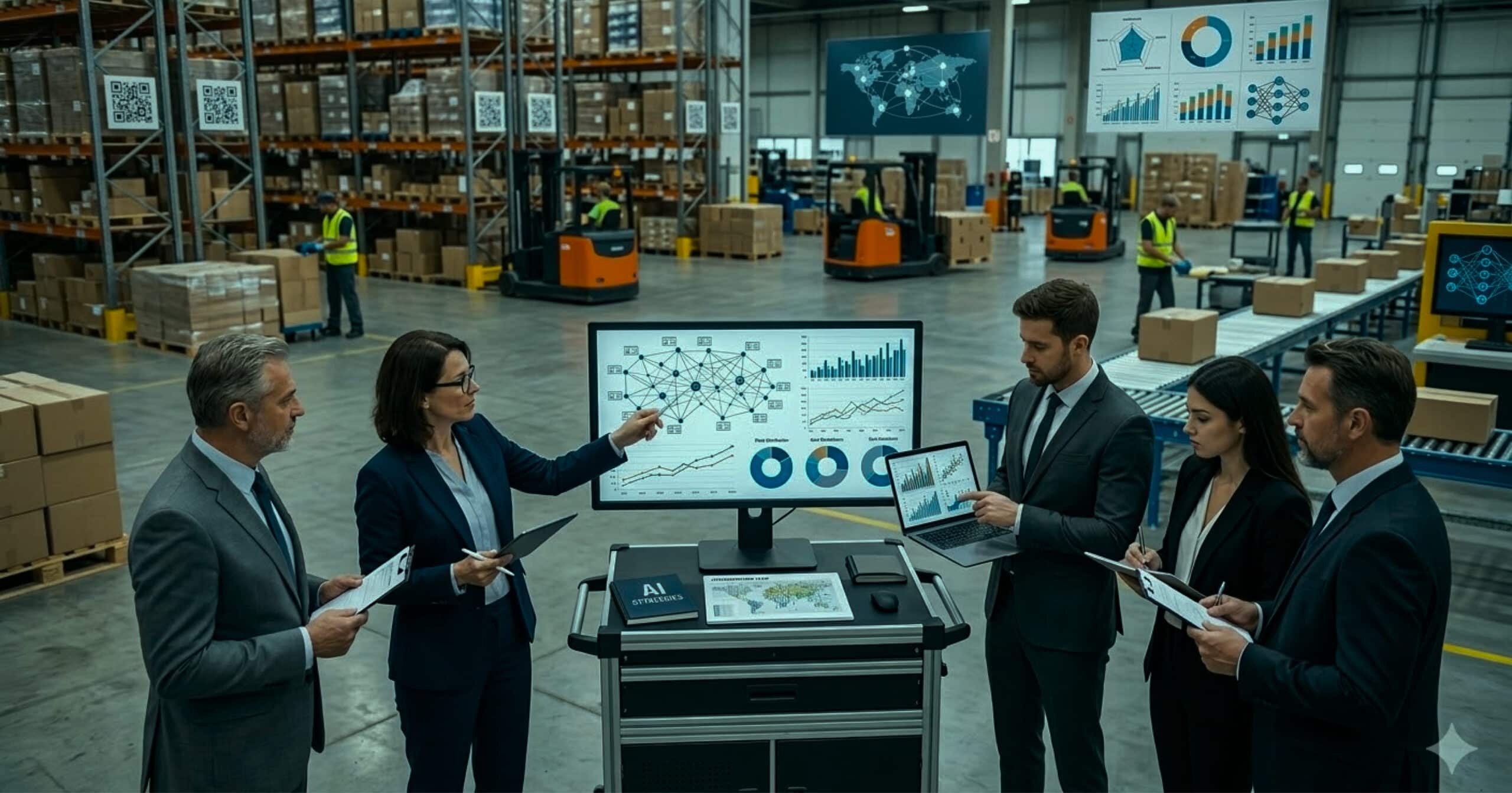

Shippers are under pressure to protect delivery promises while keeping transportation spend in check. However, same-day expectations, returns, and evolving network complexity make it harder quarter over quarter. In this competitive environment, artificial intelligence (AI) helps logistics teams streamline carrier, routing, and exception decisions without adding more manual work.
This guide explains where AI in logistics creates value, its top use cases, and strategies for implementation.
Key highlights:
- Logistics AI is the application of machine learning and predictive algorithms to supply chain data to improve fulfillment execution in real time.
- The top applications of artificial intelligence in logistics include ML-powered transit modeling, fully loaded rate shopping, and conversational supply chain analytics.
- Successful AI deployment requires building a unified data foundation and establishing a closed-loop feedback stream that uses actual delivery performance to continuously refine model accuracy.
- Shipium provides a centralized shipping AI platform that enhances complex logistics decisions and reduces parcel spend for enterprise organizations.
What is artificial intelligence in logistics?
Artificial intelligence in logistics is the application of machine learning (ML) algorithms, predictive analytics, and automation technologies to optimize supply chain processes, including demand forecasting, route planning, inventory management, and last-mile delivery.
Consider how you manage transit expectations during a volatile season. Instead of relying on a static zone chart that ignores local carrier backlogs, AI-driven transit modeling analyzes recent shipment events to predict the actual arrival date for a specific zip code. You can then automatically select the lowest-cost service that still meets your customer’s delivery promise, protecting your margins without risking a late package.
What are the benefits of AI in logistics?
The benefits of AI in logistics show up in speed, consistency, and financial predictability. According to Deloitte, intelligent automation such as AI can lower organizational costs by up to 32%. When teams automate repetitive processes, they reduce the delay between a shipment event and the action that follows it, minimizing disruptions that can inflate expenses and stall throughput. Results include:
- Increased efficiency: Streamlined logistics workflows, enabling faster processing and resource use without unnecessary delays.
- Cost control: Optimized resource allocation, minimizing waste and overhead across operations.
- Enhanced accuracy: Precise insights from complex data patterns, reducing errors in planning and execution.
The top 17 AI use cases in logistics
To get the most out of this technology, identify where it can improve what you’re already doing to reduce friction in planning, transportation, or fulfillment, for example. Here are 17 top applications of artificial intelligence in logistics to get you started.
| # | AI use cases in logistics | What you can do with this AI use case |
|---|---|---|
| 1 | ML-powered transit time modeling | Apply predictive analytics to historical data and real-time signals—like weather and hub congestion—to model more accurate delivery dates |
| 2 | Fully loaded rate shopping | Compare landed cost, not just base rate, so logistics teams can choose the most cost-effective ecommerce shipping option after fuel and accessorials |
| 3 | Delivery date enhancement | Improve checkout and post-purchase promises by factoring in carrier performance, destination, and order attributes |
| 4 | Conversational supply chain analytics | Let planners ask natural-language questions about shipping, inventory, and service data to AI tools instead of building manual reports |
| 5 | Strategic network simulations | Test carrier or shipment volume shifts before you commit capital to operational changes, enhancing ecommerce supply chain management |
| 6 | Carrier load management | Allocate volume across carriers based on cost, capacity, and service goals |
| 7 | Packaging optimization | Get recommendations on the right carton or mailer for each order to minimize dimensional weight, waste, and the risk of damage |
| 8 | Predictive demand forecasting | Forecast demand by SKU, location, or channel to position inventory and labor before surges |
| 9 | Intelligent delivery exception management | Detect delays, missed scans, and shipment anomalies early, then route them to the right workflow |
| 10 | Dynamic route optimization | Recalculate routes as conditions change to reduce mileage and protect delivery service-level agreements (SLAs) |
| 11 | Automated invoice auditing | Compare freight invoices against contracted rates, shipment events, and accessorial rules to identify billing errors before payment |
| 12 | Mode optimization | Weigh parcel against LTL rates using predictive analytics and apply generative AI to simplify complex freight requirements |
| 13 | Post-purchase support agents | Deploy AI assistants that answer shipment-status questions and reduce repetitive support volume, such as “Where is my order?” (WISMO) requests |
| 14 | Smart inventory slotting | Place fast-moving items closer to pick faces and high-activity zones to cut travel time |
| 15 | Supplier risk assessment | Score suppliers on lead-time variability, fulfillment performance, and disruption signals to spot risk before service suffers |
| 16 | Adaptive warehouse labor scheduling | Match staffing plans to forecasted demand, inbound volume, and order mix so labor aligns with the workload |
| 17 | Multi-node inventory rebalancing | Shift inventory levels across fulfillment nodes to improve availability, reduce split shipments, and support faster delivery |
Discover how ML and AI are transforming shipping.
AI in logistics: Examples from leading enterprises
Enterprise examples from Duluth Trading Co. and Saks OFF 5TH show how using AI helps logistics leaders make better delivery decisions for streamlining operations.
Duluth Trading Co.: Overcoming peak season challenges with logistics AI
Duluth Trading Co. transformed its peak season performance by replacing rigid, IT-dependent processes with Shipium’s enterprise shipping optimization platform. Before this shift, simple changes to carrier limits or business rules often took the company months to execute across disparate warehouse systems.
By deploying Shipium, Duluth reclaimed internal control over its network. The brand benefited from:
- Rapid configuration: Duluth’s logistics teams can now adjust shipping strategies and business rules network-wide in just hours instead of months.
- Peak responsiveness: During the high-volume 2023 peak, the brand fulfilled last-minute marketing promises for guaranteed Christmas delivery by pivoting its carrier strategy in real time.
- Operational uptime: Shipium’s self-service console allowed the company to maintain zero downtime, even amid rapid changes to support marketing initiatives during peak season.
Saks OFF 5TH: Enhancing the delivery experience with AI for logistics
Saks OFF 5TH modernized its luxury ecommerce journey by using AI to power precise delivery expectations at checkout. Initially, legacy software limited the brand to a single national carrier and offered only vague delivery windows, hindering the premium brand experience.
Through Shipium’s AI-driven carrier selection, Saks OFF 5TH transformed shipping into a competitive advantage through:
- Delivery precision: The brand replaced vague shipping estimates with a “Guaranteed Delivery Date” product feature, providing customers with a precise arrival date at checkout.
- Diversified network: Saks OFF 5TH expanded from one national carrier to a roster of 12 specialized regional providers in less than six months.
- Margin protection: The brand lowered reliance on its original national carrier from 100% to just 7% of total volume, meeting delivery promises at the lowest possible cost.
Strategies for implementing artificial intelligence in logistics
Clean data and clear operating rules are the first steps toward successful AI deployment in large supply chain operations. This baseline ensures you build your machine learning models on an accurate source of truth. Follow these strategies for implementation:
1. Identify your most relevant use cases
Start by mapping operational bottlenecks where manual rules fail to scale, such as high split-shipment rates. Target these high-friction points to define clear KPIs for your project. To bring immediate value to your bottom line, focus on areas with the highest parcel spend.
2. Build a unified network data foundation
Having a single, reliable source of information for AI technologies makes them more effective. Still, McKinsey research shows that 70% of high-performing organizations implementing generative AI have experienced difficulties with data, including:
- Quickly integrating information into AI models
- Defining processes for data governance
- Having an insufficient amount of training content
To prioritize high-quality data inputs when implementing artificial intelligence in logistics:
- Include all relevant logistics data variables, such as shipment origin, weight, and day of the week
- Maintain standardized formats for data transfers to minimize processing errors
- Remove duplicates or erroneous entries that distort typical transit times
- Provide executed shipment data on an ongoing basis so the model stays current
3. Empower your logistics team with AI literacy
Give your operational team enough technical literacy to question outputs, recognize edge cases, and apply recommendations correctly. Effective oversight requires a human-in-the-loop approach where staff acts as strategic supervisors of automated workflows.
This step fosters AI adoption, helping users understand the logic behind key system decisions, such as those involving parcel shipping optimization or high-level inventory management.
4. Establish a feedback loop for continuous refinement
To prevent model drift, supply chain operations leaders must implement a process that compares predicted transit times against actual delivery performance. By establishing closed-loop parcel workflows, you ensure that AI uses executed shipment data to refine future predictions.
Get leading AI for logistics with Shipium
With an AI-driven shipping platform like Shipium, you can reduce parcel spend, improve delivery date accuracy, and automate complex network coordination. Our shipping AI; acts as a centralized intelligence layer that orchestrates fulfillment execution across your existing systems.
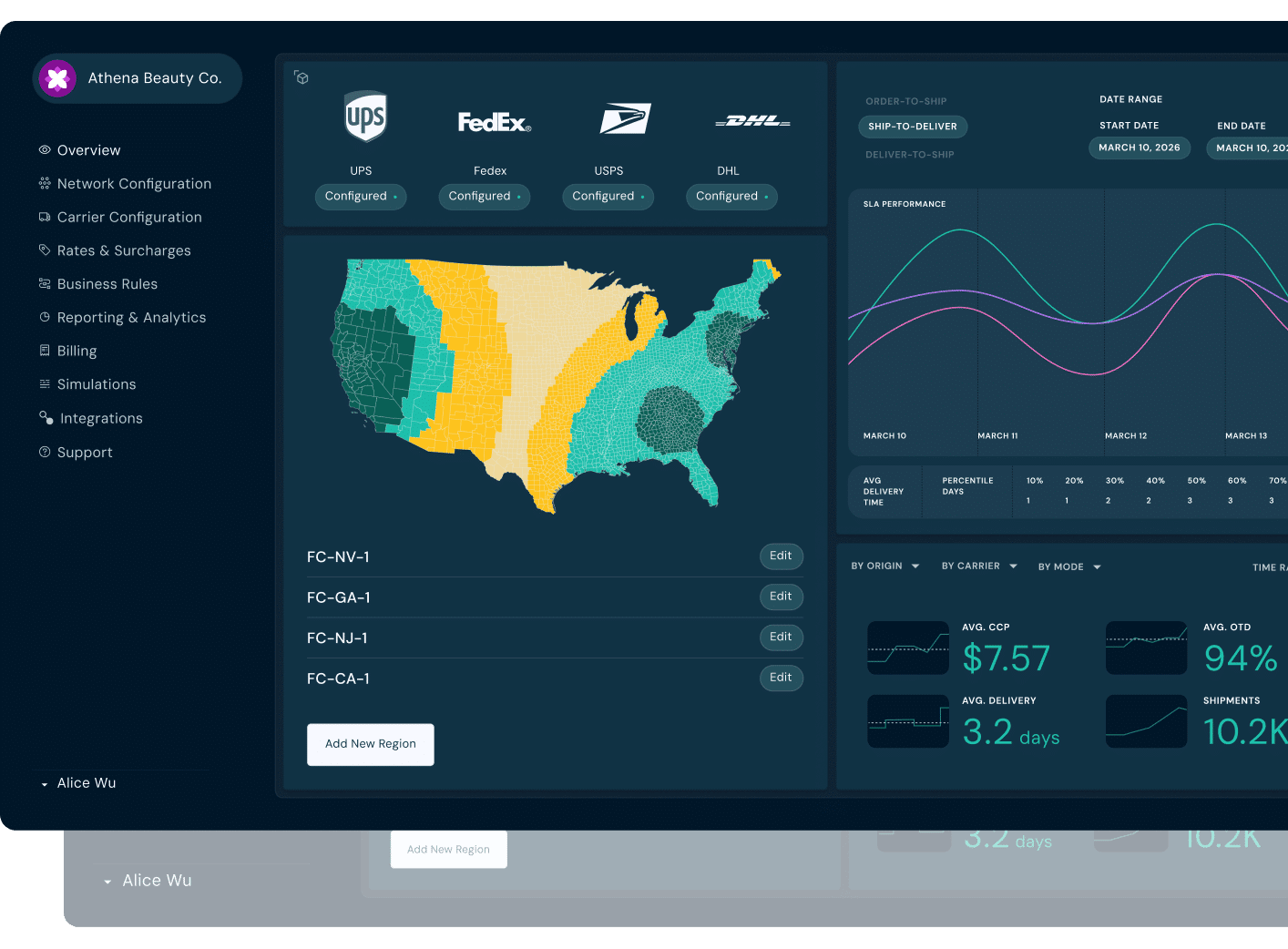
Shipium replaces rigid, manual logic with a dynamic infrastructure that adapts to disruptions in real time. Orca AI analytics extends this capability by providing a conversational interface for instant performance checks. Operators use this co-pilot to identify cost drivers or transit bottlenecks. It’s as simple as asking a question like “What was the on-time performance for Next Day service level last month?” and getting an actionable insight in response.
Get a demo to see for yourself how to start using AI in logistics with Shipium.
-
 Read more
10 Ecommerce Shipping Best Practices Every Company Should Follow
For enterprise ecommerce businesses, shipping doesn’t just represent a significant portion of operating expenses…
-
Read more
10 Shopify Fulfillment Best Practices for Ecommerce Businesses
A successful Shopify ecommerce business not only drives sales but also delivers a seamless…
-
 Read more
5 Ways to Effectively Manage Ecommerce Shipping Delays
More than two-thirds of customers have experienced at least one delayed delivery in their…